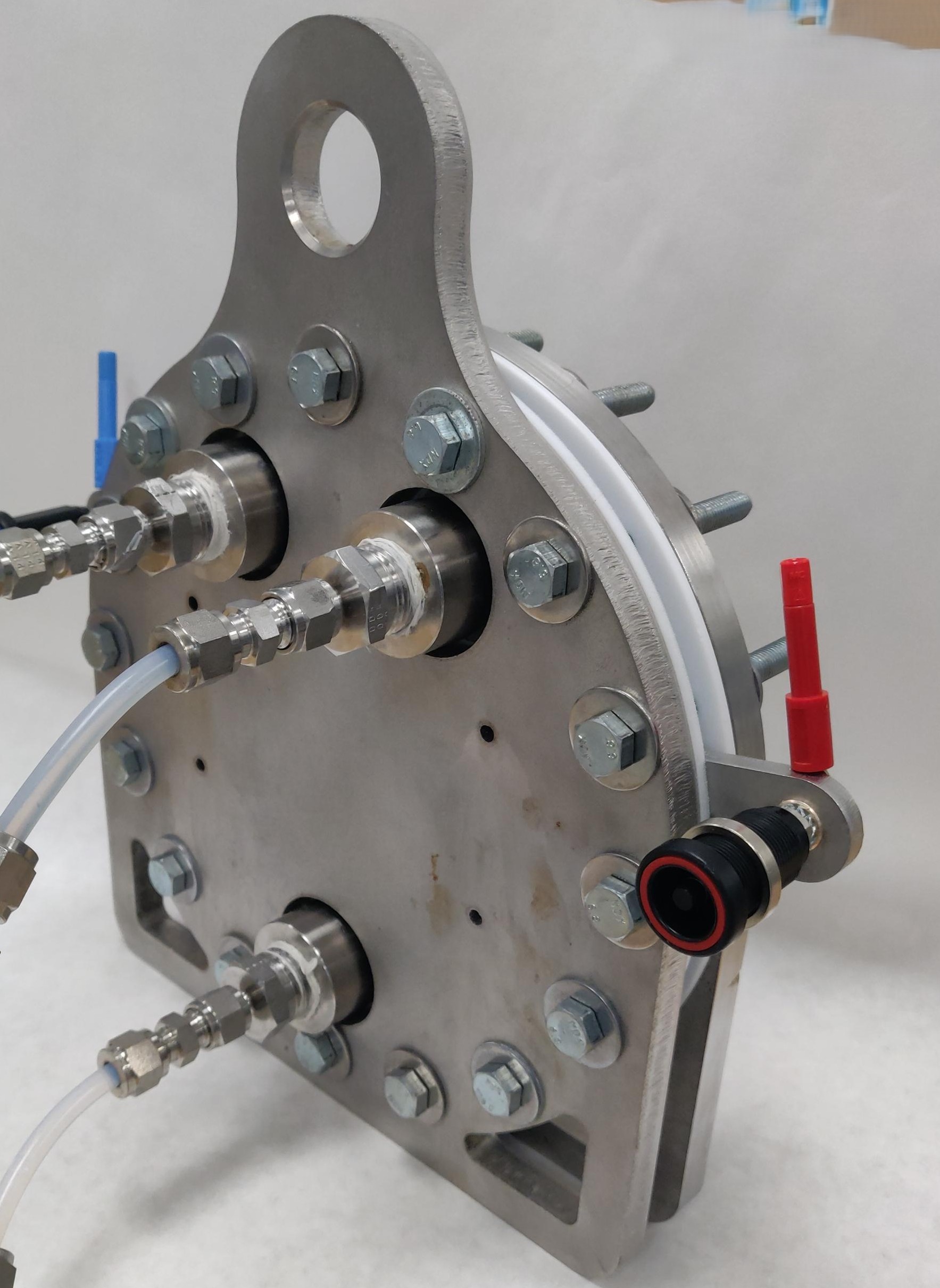
- The project strengthens Spain’s industrial value chain by bringing together companies and technology centres to develop a new generation of more competitive, modular AEM electrolysers free of noble metals
Terrassa, 12 November 2026. Renewable hydrogen is an important energy carrier for decarbonising sectors that are difficult to electrify, such as the chemical industry, heavy-duty transport and metallurgy. Large-scale production of renewable hydrogen using electrolysers faces two main challenges: economic viability and heavy reliance on costly critical raw materials such as platinum and iridium. This dependence affects both the cost and scalability of existing systems.
The StackAEM R&D project addresses these challenges by developing a new generation of anion exchange membrane (AEM) electrolysers. This technology improves the efficiency and modularity of hydrogen production and could help make renewable hydrogen more competitive by replacing scarce materials with more abundant, robust and affordable components.
The StackAEM consortium brings together Kemtecnia, Leitat, Lurederra, Ochoa Maquinaria and Valfortec. The partners cover the entire value chain, from research into new catalysts and components to the design, manufacture and validation of single cells, stacks and a final 5 kW electrolyser prototype for renewable hydrogen production.
“With this project, we want to demonstrate that hydrogen can be produced using electrolysers free of critical raw materials without sacrificing efficiency. This could significantly reduce costs and eliminate dependence on external suppliers,” says Marian Garcia, Senior Researcher in Bioelectrochemical Systems at Leitat.
Technology to lower the cost of renewable hydrogen
An electrolyser uses electricity to split water into hydrogen and oxygen. StackAEM aims to use renewable electricity to keep CO₂ emissions low while making the process efficient, durable and economically viable. The project uses a modular design and develops catalysts and components based on materials that are more readily available and less expensive than the platinum and iridium used in some commercially available electrolysers.
The initiative comes at a strategic moment for Spain. The country’s National Integrated Energy and Climate Plan (PNIEC) for 2023–2030 sets a target of 12 GW of installed electrolyser capacity. Developing scalable technologies in Spain can help build a more self-reliant hydrogen industry.
From research to prototype
One of the project’s first technical milestones was the design, construction and validation of an AEM test cell with an active area of 9 cm². The cell provides a platform for rapidly testing and comparing the performance of membranes, catalysts, electrodes and bipolar plates under controlled conditions before integrating them into larger systems.
Building on this work, the project has moved on to larger cells and modular stacks. The final design for the 5 kW AEM electrolyser comprises four independent stacks, each containing eight cells with an active area of approximately 80 cm² per cell. This configuration supports gradual scale-up, improves operating flexibility and allows the team to optimise material use. In recent weeks, Leitat has developed a 0.45 kW electrolyser with a single stack of three 78 cm² cells. The unit can produce up to 0.21 kg of H₂ per day (106 L of H₂ per hour) and operates at 76.6% efficiency, with an energy consumption of 51.4 kWh per kg of H₂.
Leitat contributes its expertise in turning research advances into equipment that can operate under real-world conditions. Its work focuses on improving key electrolyser components, including membranes, electrodes and catalysts, and integrating them into the cells and stacks where hydrogen is produced. The team tests how efficiently and reliably these components perform over time. This validation helps identify improvements, reduce risks before manufacturing larger systems and bring the technology closer to market.
One of the project’s main research areas is the development of cathodes free of platinum-group metals, using cobalt phosphide supported on carbon nanofibres. Further work is needed to meet commercial performance and durability standards. The results to date indicate that these materials could help reduce costs and reliance on critical raw materials.
Supporting the energy transition
StackAEM strengthens Spain’s renewable hydrogen value chain by combining expertise in nanotechnology, advanced materials, mechanical engineering, equipment design and experimental validation. Its goal is to demonstrate a modular 5 kW AEM electrolyser capable of producing more than 2 kg of hydrogen per day, with an efficiency above 60% and degradation below 2% per 1,000 hours of operation.
The project also supports industrial innovation in Spain. More competitive electrolysis technologies could make renewable hydrogen a viable option for decarbonising energy-intensive sectors, create skilled jobs and strengthen Europe’s technological autonomy.
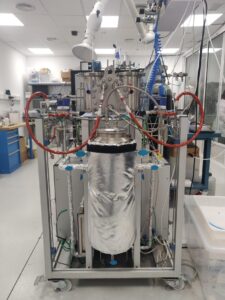
Photo caption. Leitat’s test bench for operating and characterising electrolysis cells and stacks.
About Leitat
Leitat is Europe’s oldest technology centre. With 120 years of history, it is a recognised centre in Spain and across Europe. Its team of more than 400 professionals specialises in applied research, technical services and the management of technology and innovation initiatives. Leitat’s mission is to help companies improve their competitiveness through innovation and technology transfer.
Leitat creates social, industrial, economic and environmental value through solutions in health and biomedicine, new materials, environmentally sustainable production, occupational health and safety, waste recovery and the use of natural resources, industrial connectivity and digitalisation, renewable energy and energy efficiency.
Leitat carries out R&D and innovation projects for companies and institutions and leads research projects with competitive funding from the European Union and Spain’s Ministry of Science, Innovation and Universities.
For further information and interview requests:
Intermedia Comunicación
Borja Igual: bigual@intermedia.cat | 646 216 663
Laura Fernández: lfernandez@intermedia.cat | 619 390 745