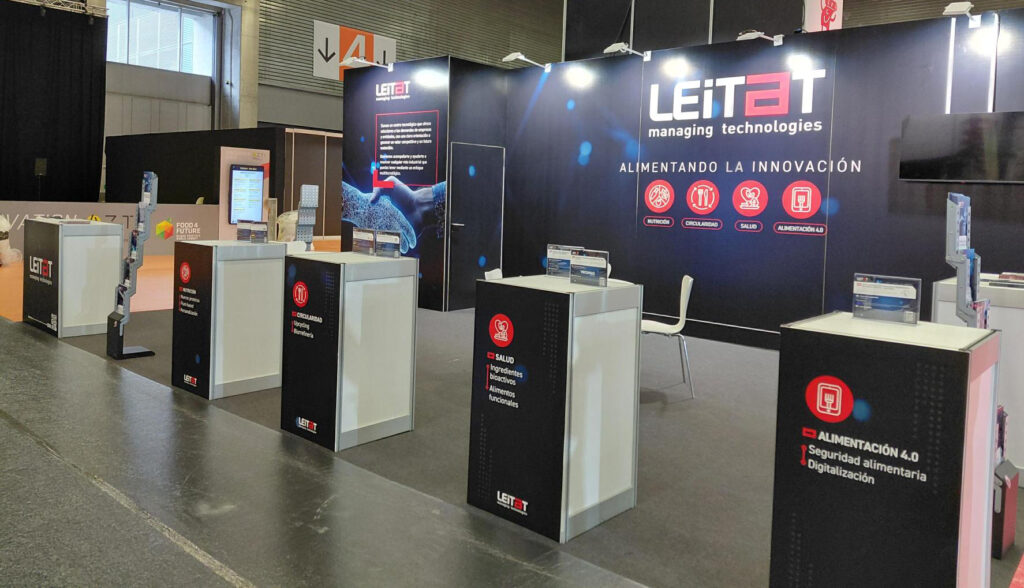
- The food technology event will take place on May 27 and 28 at the Bilbao Exhibition Centre (BEC).
- The technological centre, which this year celebrates its 120th anniversary, will present twelve disruptive solutions ranging from 3D food printing to hyperspectral vision applied to quality control.
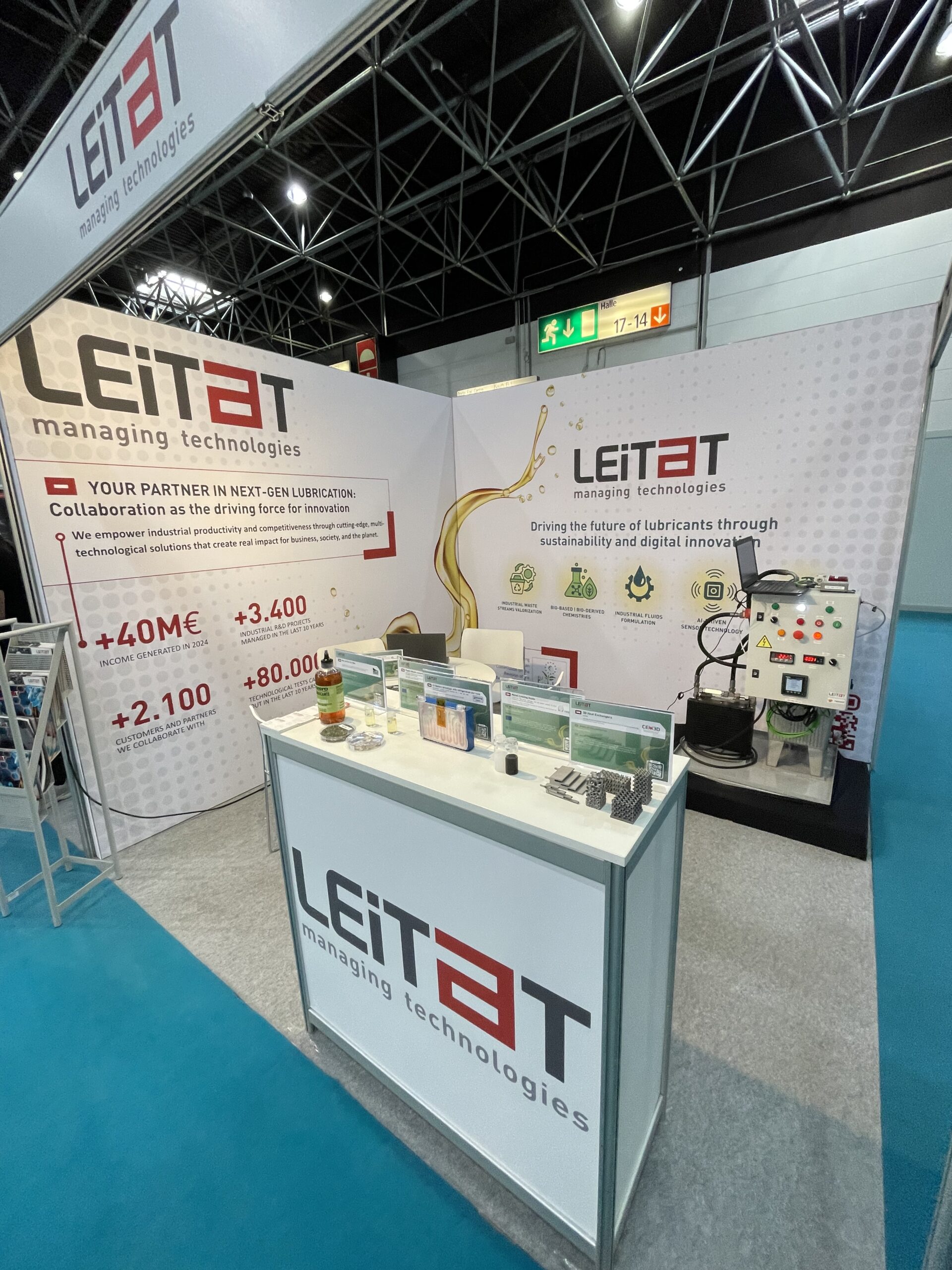
Leitat will once again be one of the key players at Food 4 Future 2026, the leading international congress on innovation for the food and beverage industry, which will be held on May 27 and 28 at the Bilbao Exhibition Centre. As part of the celebration of its 120th anniversary, the technological centre will travel to Bilbao to present twelve technologies and demonstrators aimed at accelerating the transformation of the food industry towards more efficient, sustainable and digitalised models. To achieve this, the technological centre seeks to reduce pressure on natural resources, promote the circular economy and optimise industrial processes through advanced digitalisation.
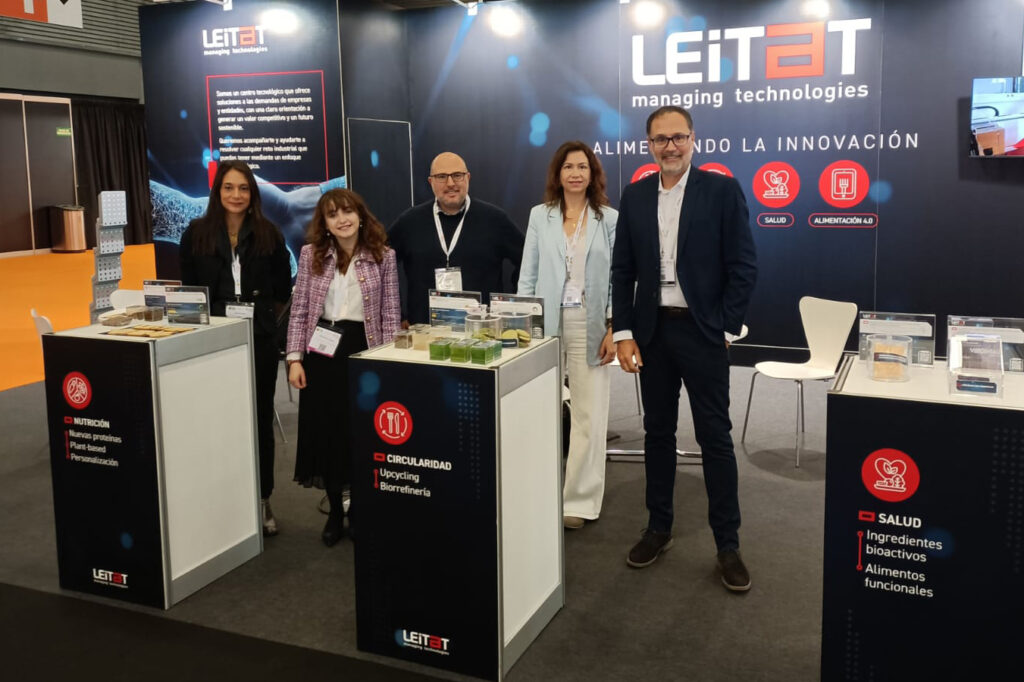
Leitat’s strategy for this trade fair revolves around the integration of biotechnology, artificial intelligence and new production processes to develop more sustainable, functional foods adapted to new market demands. Among the most notable demonstrators to be presented at stand 2F617 are consolidated technologies and new high-impact solutions:
- Future proteins and circular economy: Leitat reinforces its leadership in the development of functional ingredients from microalgae, fungi or insect bioconversion (such as Tenebrio molitor), transforming plant by-products into high added-value ingredients (with success stories in projects such as INSECTUM or HULLinFOOD). Solutions for vegetable protein texturisation for meat analogues also stand out.
- 3D food printing: the technological centre will showcase advances in the design and modelling of foods enriched with microencapsulated nutrients aimed at children, seniors or athletes, as well as the integration of cooking, refrigeration and texture measurement systems within the printers themselves. As an example and symbol of the centre’s 120 years, a biscuit made with microalgae will be exhibited.
- Artificial Intelligence and advanced vision: Vision solutions (RGB, multispectral and hyperspectral) for quality control and contaminant detection in the agri-food sector will be presented, as well as smart digitalisation proposals for production processes and the ASTRAL prototype, a photonic system with AI for continuous quality control.
Montse Jorba, Director of Leitat’s Bioresources and Agri-food Technologies Area, highlights the value of applied research in the sector: “We work to offer real alternatives that redefine the food chain. From the valorisation of by-products to the obtaining of new protein sources, as well as the development of functional ingredients and new food products, the key is to provide added value without compromising nutritional quality or the sensory experience,” she explains.
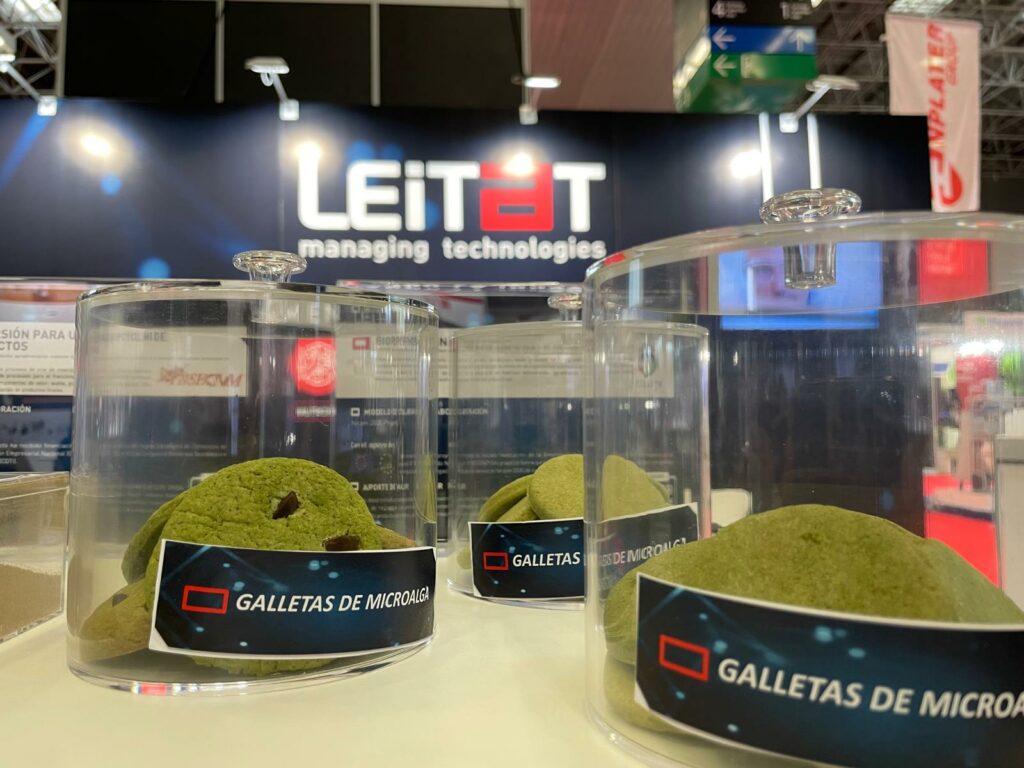
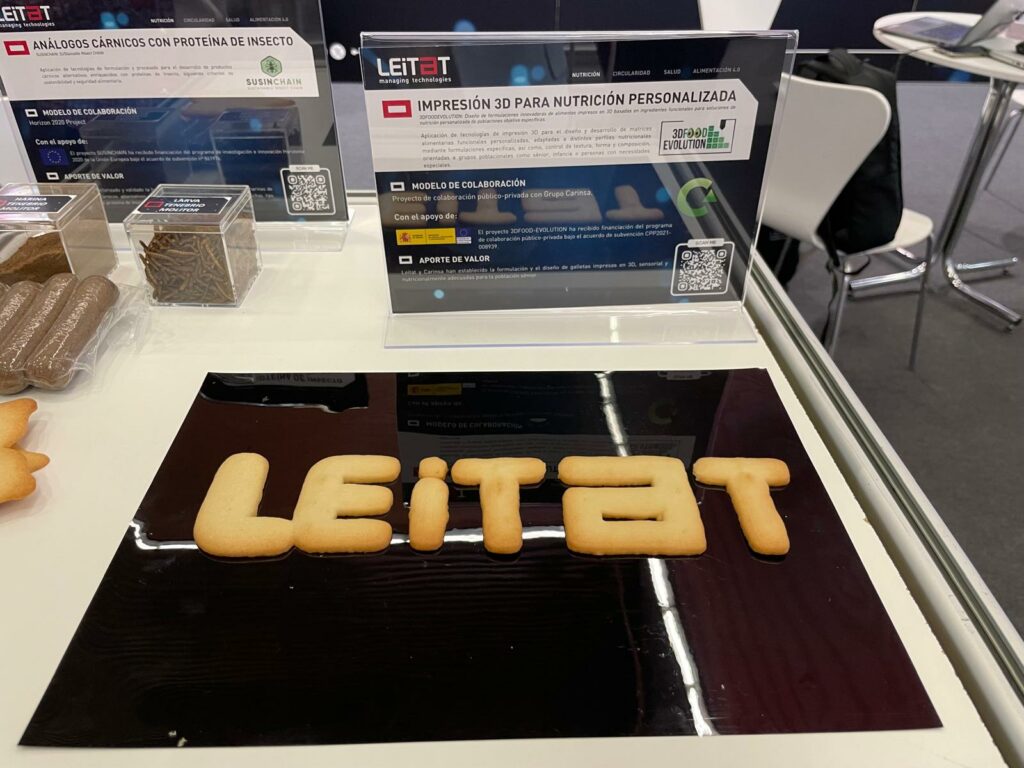
Microalgae cookies and 3D food printing for personalised nutrition, featured at the 2025 F4F edition.
Expert opinions at the congress
Beyond its exhibition space, Leitat will actively participate in the scientific programme of Food 4 Future through two sessions focused on the major challenges facing the food sector:
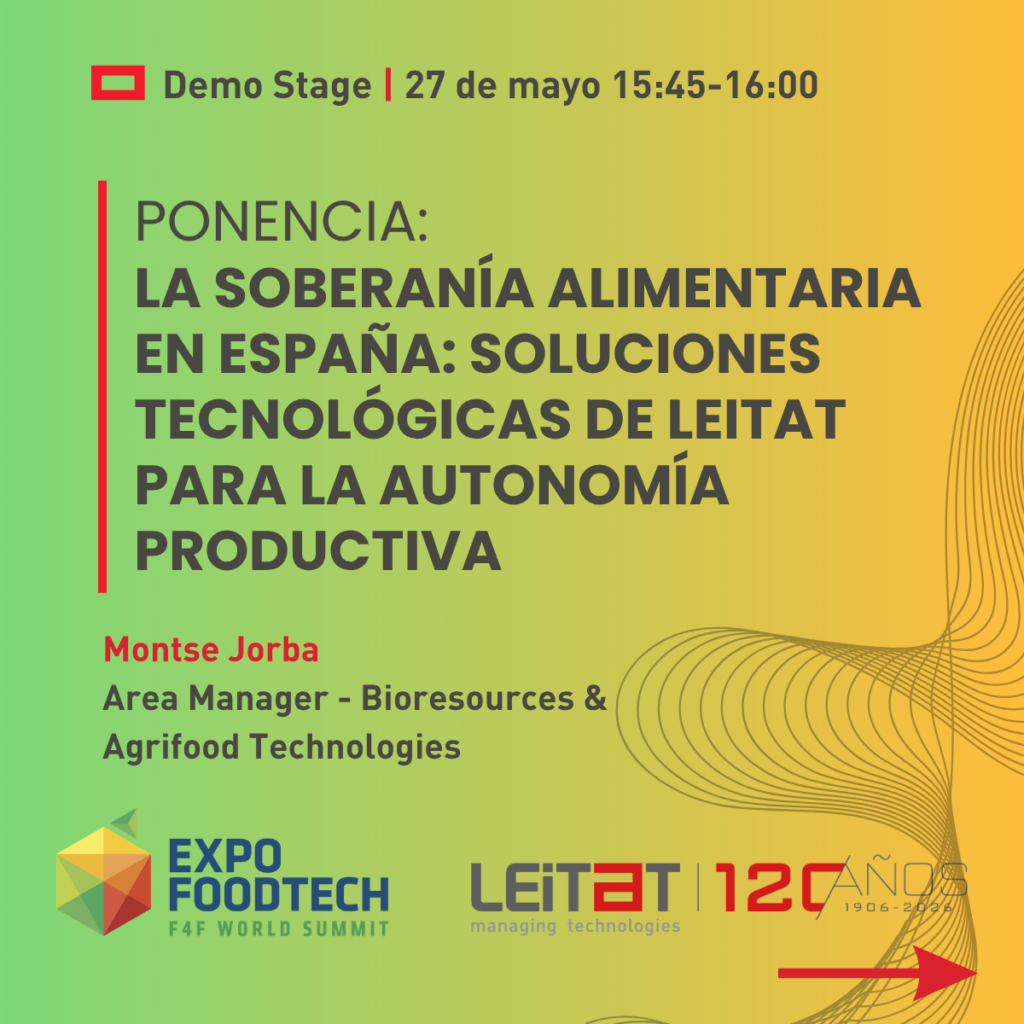
- Presentation: “Food sovereignty in Spain: Leitat’s technological solutions for productive autonomy” (May 27, at 3:45 p.m., at Demo Stage). Montse Jorba will address the technological solutions promoted by Leitat to move towards more resilient and sustainable food models capable of strengthening productive autonomy.
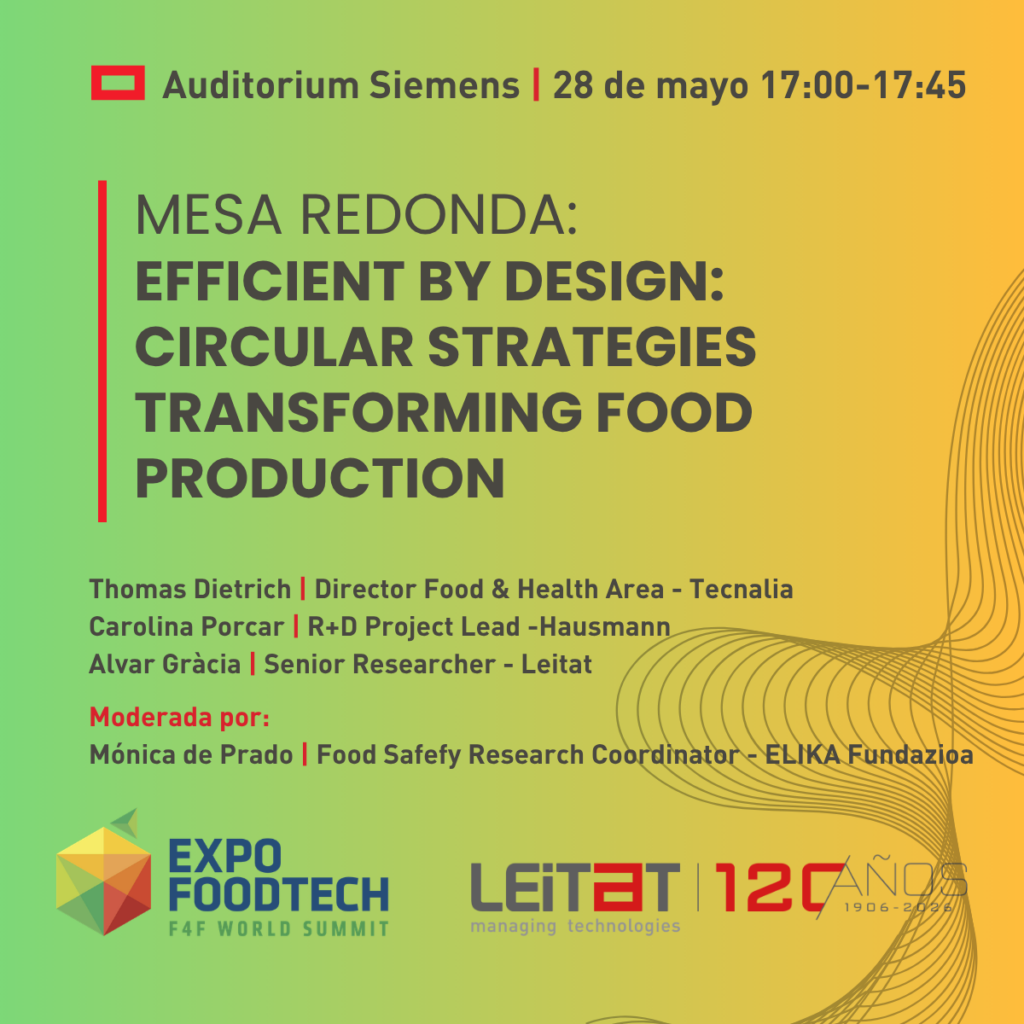
- Round table: “Efficient by Design: Circular Strategies Transforming Food Production” (May 28, at 5 p.m., at the Siemens Auditorium). Àlvar Gràcia, Senior Researcher at Leitat, will participate in an international round table focused on circular strategies applied to food production; moderated by Mónica de Prado, Food Safety Research Coordinator at ELIKA Fundazioa, and featuring Thomas Dietrich, Director of the Food & Health Area at Tecnalia, and Carolina Porcar, R&D Project Lead at Hausmann. The session will explore how the industry is redesigning processes, materials and resource flows to reduce waste, improve efficiency and move towards more sustainable and competitive models.