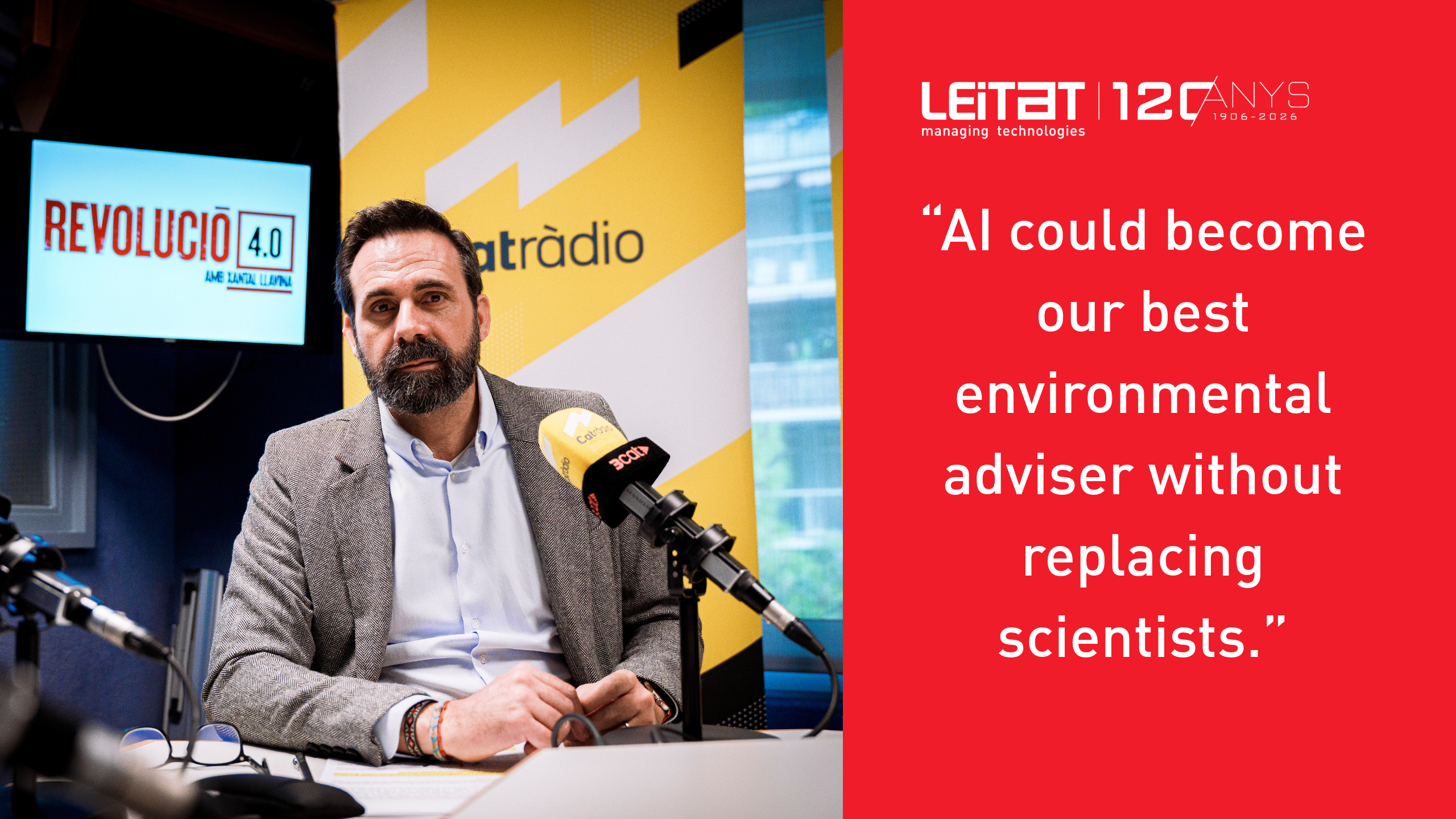
Jordi Cabrafiga, Leitat’s Director General, discusses on Catalunya Ràdio’s Revolució 4.0 how applied research can help identify sources of urban pollution and develop more sustainable road and pavement surfaces.
How can we tell where urban pollution comes from? And what role can the materials we use to build our streets play in reducing their environmental impact? These are some of the questions Jordi Cabrafiga, Leitat’s Director General, discussed with Xantal Llavina on Catalunya Ràdio’s Revolució 4.0.
During the conversation, Cabrafiga shared two examples of how technology centres help address urban challenges. PUREPOLIS combines artificial intelligence and environmental data to help identify pollution sources. RePavimenta proposes using materials with a low carbon footprint and recycled components in roads and pavements.
From measuring pollution to identifying its sources
Measuring pollution levels is a first step towards tackling pollution. Identifying where it comes from can help public authorities decide where to act and which measures to prioritise.
With this goal in mind, the European project PUREPOLIS is developing tools and strategies to identify, assess and reduce sources of pollution in cities. As part of the project, Leitat is leading the development of an AI-based tool that uses existing environmental monitoring systems to attribute pollution levels to specific sources in near real time.
The aim is to turn data into information that helps local authorities make decisions and target their actions based on the sources identified.
Rethinking the materials we use to build streets
Transforming cities also involves rethinking the materials used to build and maintain them. During the interview, Cabrafiga presented RePavimenta, a proposal by Molins, Romero Polo and Leitat selected as one of the winners of ‘La secció de carrer del segle XXI’ (‘The 21st-Century Street Cross-Section’), an urban challenge launched by Barcelona City Council and the BIT Hàbitat Foundation.
The initiative proposes rethinking roads and pavements using materials with a low carbon footprint, aggregates and recycled components. It applies circular economy principles from design through to the end of the materials’ service life. The aim is to develop solutions that help reduce CO₂ emissions and the use of natural resources in urban infrastructure.
From analysing pollution to developing new materials, the two projects show how applied research and technology transfer can give public authorities and businesses the tools to help make cities healthier and more sustainable.
Listen to Jordi Cabrafiga’s interview on Catalunya Ràdio’s Revolució 4.0.