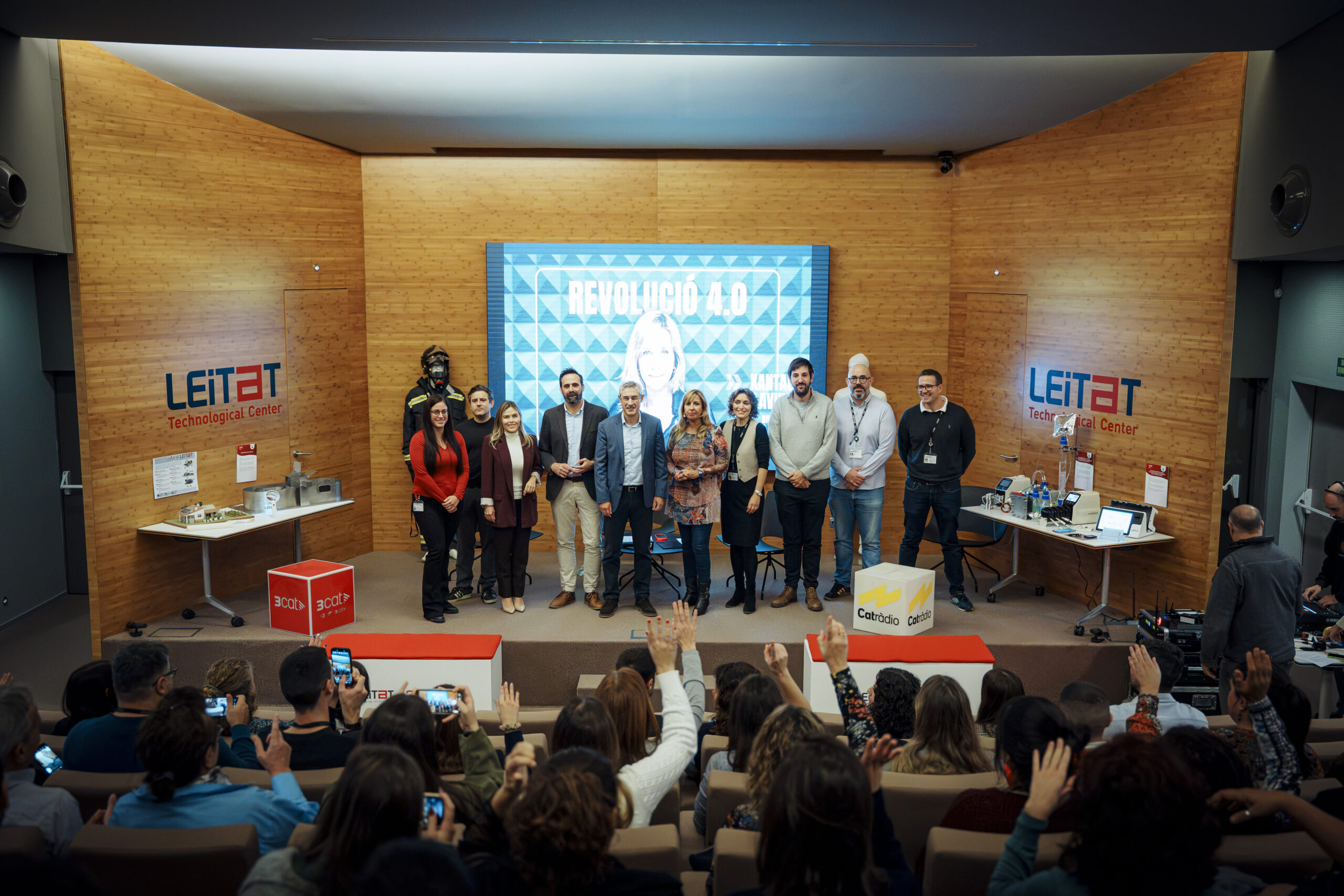
In a special edition of «Revolució 4.0» recorded in Terrassa to mark Leitat’s 120th anniversary, Jordi Cabrafiga explains how the centre helps companies bring their ideas to market. Marta Escamilla, Laura Pérez, Marc Masa and Joan Marc Cabot share examples of applied research in the circular economy, water treatment and biomedicine.
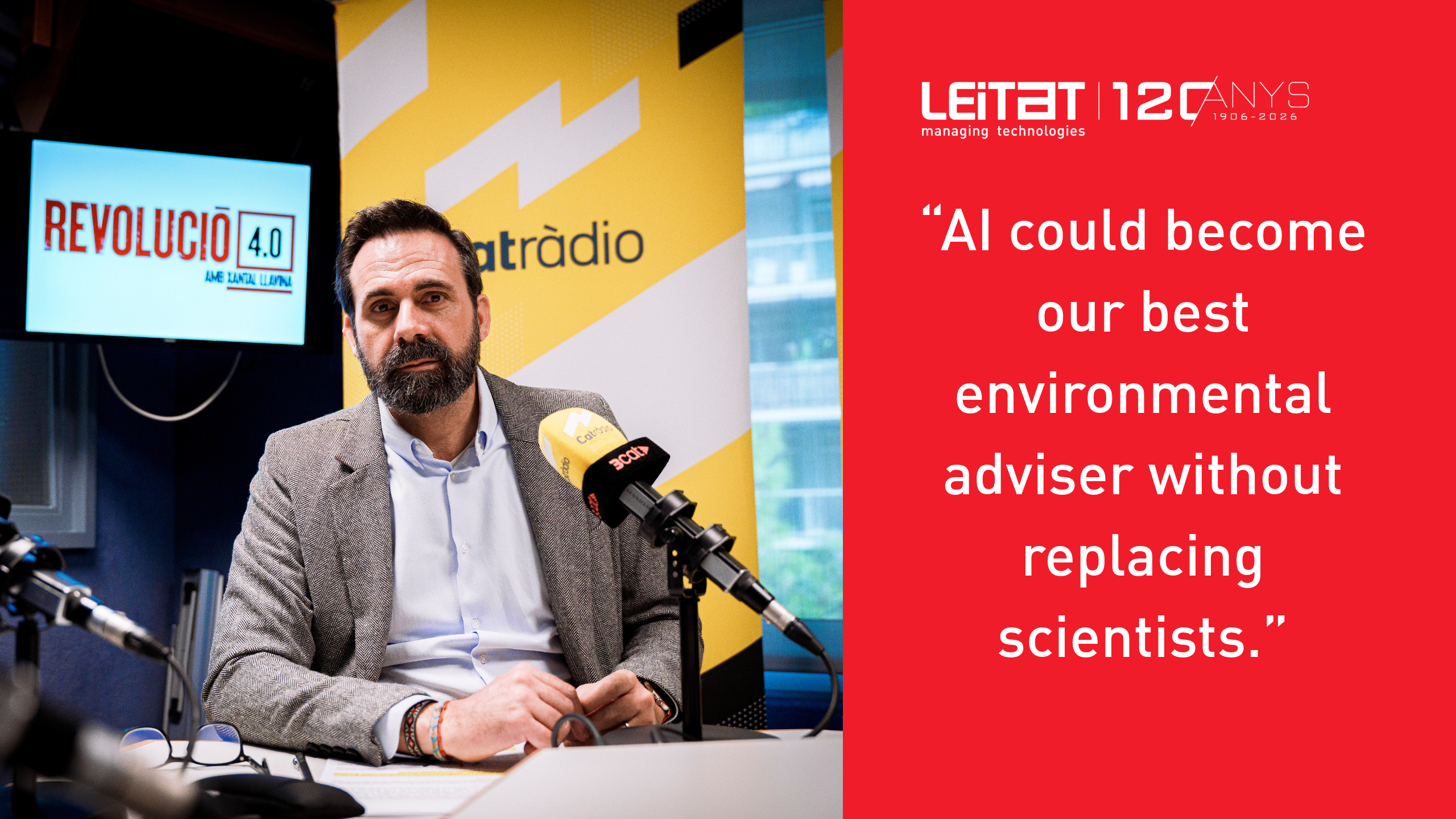
A company may have a good idea and need the expertise, equipment or facilities to develop it. It may already have a prototype that works in the lab and need support to manufacture it at industrial scale. In a special edition of Catalunya Ràdio’s Revolució 4.0, recorded at Leitat’s headquarters in Terrassa, Jordi Cabrafiga, Director General of Leitat, spoke with Xantal Llavina about how the centre supports companies along the way.
From idea to market
Cabrafiga described technology centres as an extension of companies’ R&D teams. Depending on the challenge, Leitat provides access to specialists, laboratories and equipment, and helps companies explore funding options. Protective clothing is one example. It calls for materials designed for the conditions in which they will be used, and the garments need to be validated and certified before reaching the people who rely on them.
Textiles also provided a starting point for looking back at the centre’s 120-year history. Ramon Pastor, President of Leitat, recalled how increasingly complex industrial challenges led the centre to build expertise that it could then apply in other sectors. Today, this approach helps the centre tackle problems that call for several disciplines. Treating water containing microfibres released when synthetic clothing is washed, for instance, can require expertise in chemistry, hydraulics and electronics.
From clothing design to water treatment
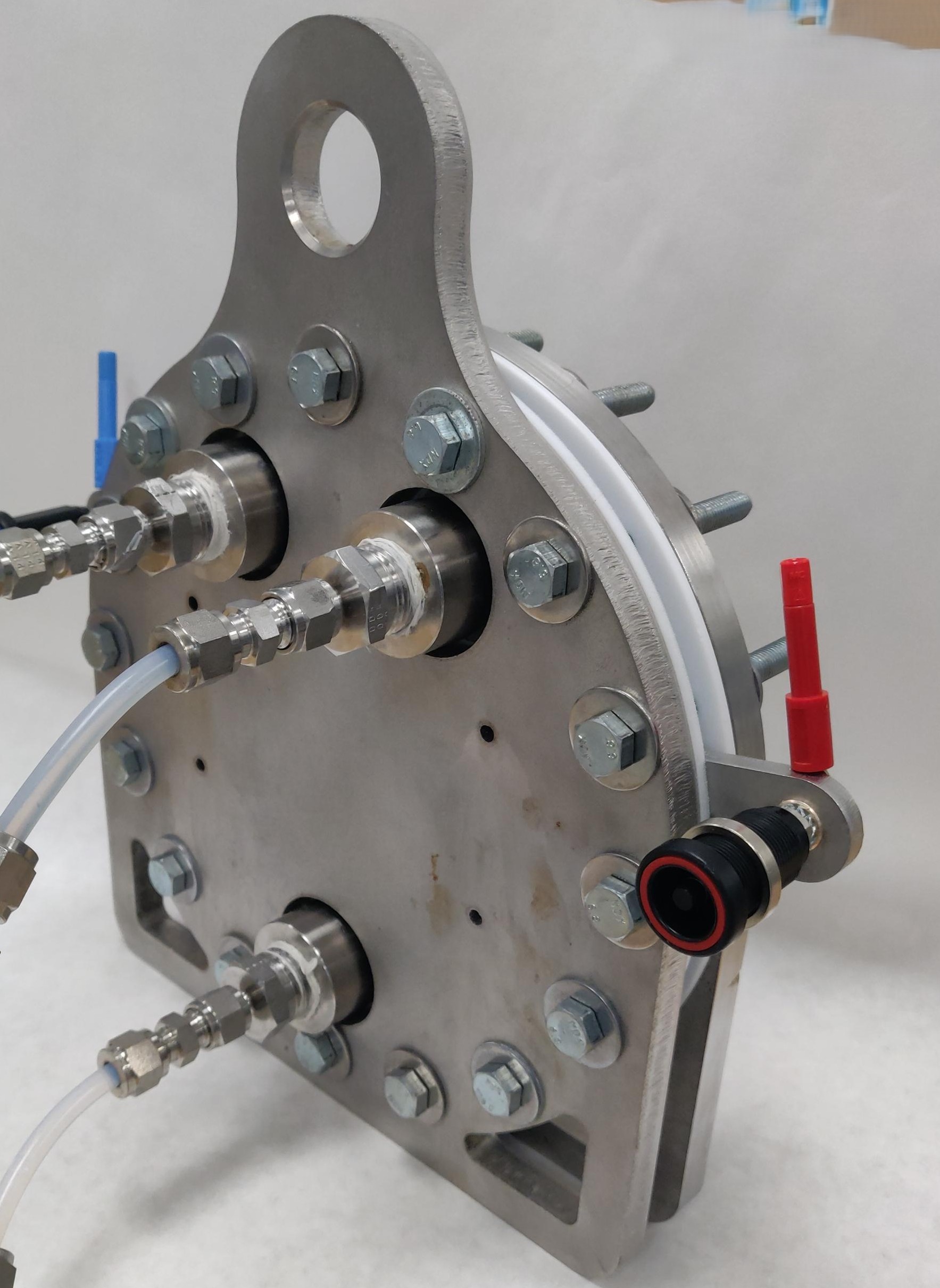
Microfibres brought together two ways of addressing the environmental impact of textiles. One starts with design. Through the SOLSTICE project, Marta Escamilla’s team helps companies incorporate environmental criteria into their products and supports a pilot in Catalonia to encourage clothing reuse and repair. Work can also take place once the particles are already in the water. Using a laboratory membrane, Laura Pérez showed how filtration can capture microplastics and explained how modular equipment can supplement treatment at existing wastewater plants.
The discussion on resource use also turned to food. Bernat Monter of GrillCo presented cricket powder as an ingredient for the food industry, while Escamilla explained how environmental assessments can help compare new protein sources with those already in use.
New tools for detecting disease and studying treatments
The health segment centred on two questions. How can we detect disease earlier? And how can we better study the response to treatment? Marc Masa presented PREDICT FTD, a European project that aims to develop and validate an AI tool combining biomarkers, imaging and behavioural data to estimate the risk of developing frontotemporal dementia.
The discussion about collecting data for health monitoring led to the sensors and digital biomarkers being developed by Onalabs, with Jaime Punter. In oncology, the focus shifted to what happens when a treatment stops working. Gabriela Jiménez of AtG Therapeutics explained how the company studies the pathways that enable tumours to adapt to treatments and keep growing.
Joan Marc Cabot brought the discussion into the lab with a demonstration. Organ-on-chip devices use human cells to recreate some organ functions in miniature. In colorectal cancer research, the Leitat team is exploring how to incorporate cells from biopsies into these devices to study how they respond to different drugs.
Listen to the full programme on 3Cat