- ARTPLAY’s project has developed a circular business model by giving a new life to post-consumer fabrics, with Leitat contributing to this transition towards circularity and quantifying its environmental and social benefits.
The “Tenim Molta Tela (TMT)” project has successfully come to an end. This circular economy initiative, promoted by ARTPLAY in collaboration with Leitat and supported by the Agència de Residus de Catalunya, has enabled the development and validation of a circular model for the reuse of post-consumer textiles in the exhibition sector.
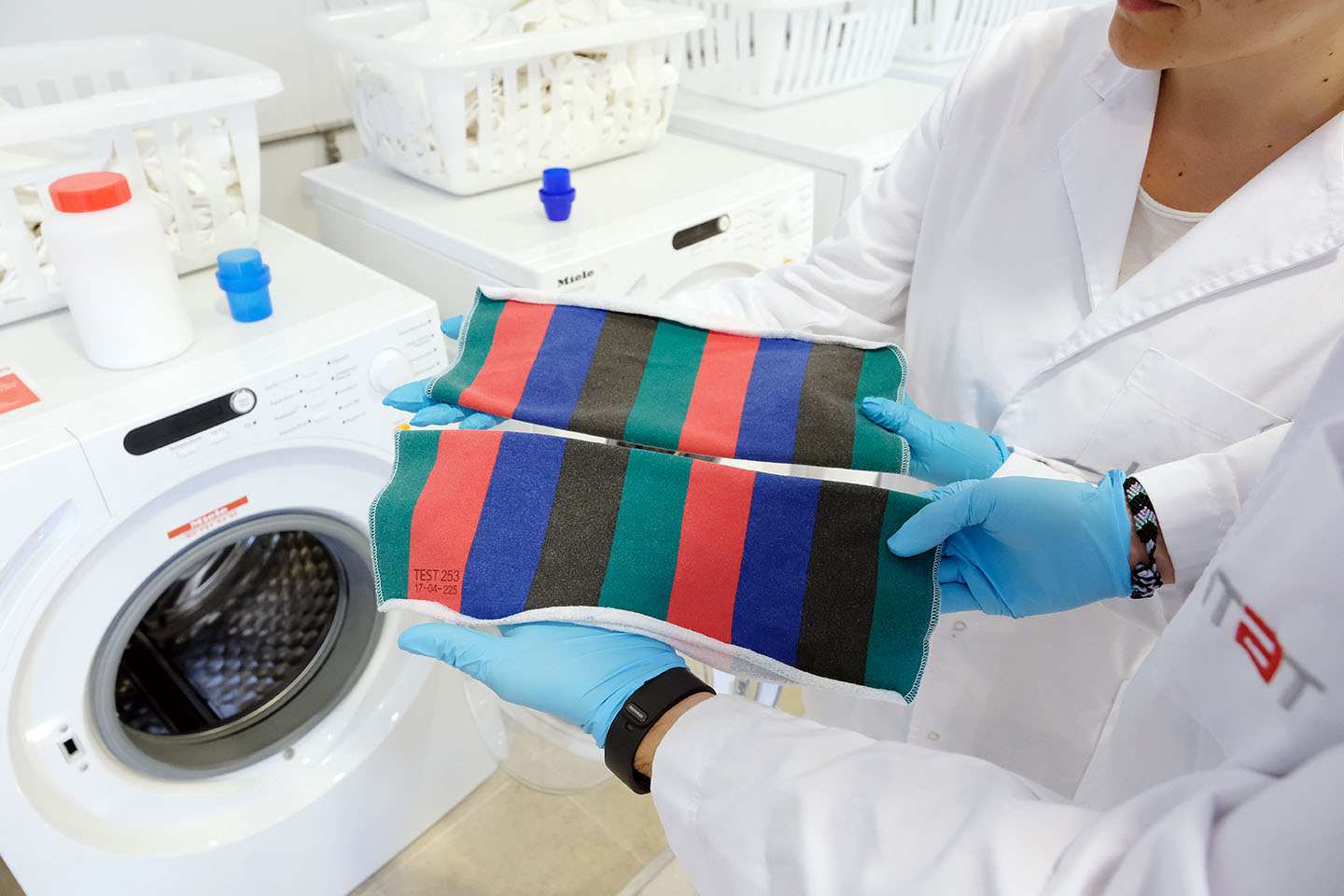
The project has given a second life to post-consumer printed fabrics, extending their useful life and preventing them from becoming waste through the development of a model applicable to the sector.
ARTPLAY manufactures and commercialises printed fabrics for exhibitions and advertising displays. Although the material has a long technical lifespan, its actual use is usually very short in events such as trade fairs, promotions or exhibitions, ranging from a few days to a few months. This reality involves intensive resource consumption and significant waste generation.
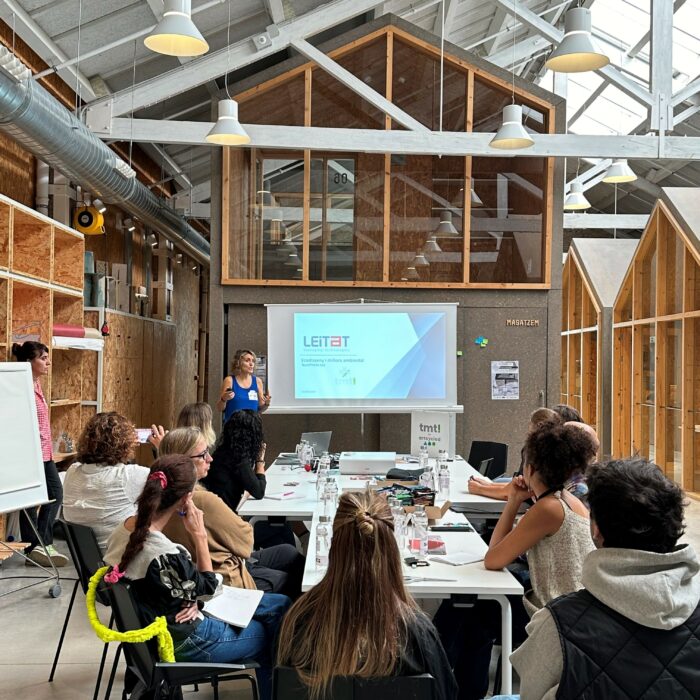
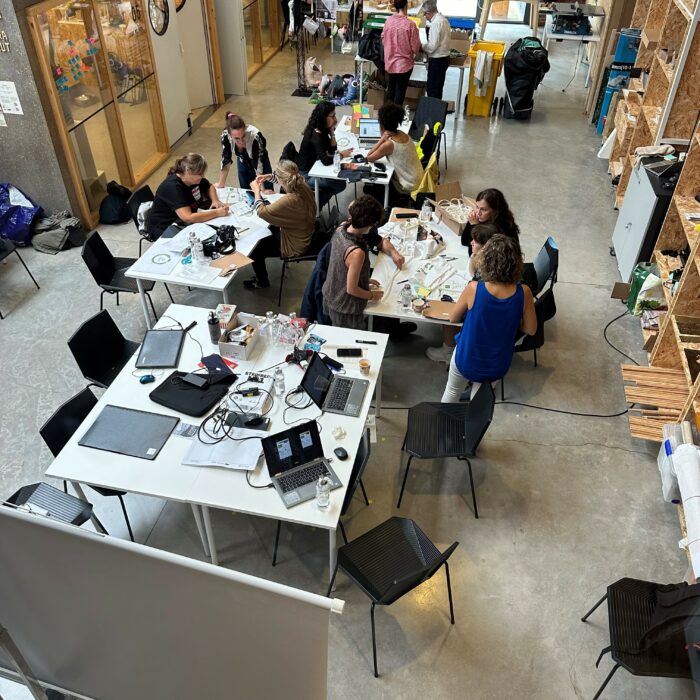
To address this challenge, Leitat worked with the company on the definition, development and validation of a circular business model focused on the reuse and upcycling of these printed fabrics once their initial use had ended. Within the framework of the project, several prototypes of new products were developed, both for the exhibition sector itself and for other applications. The ideas emerged from two participatory initiatives: the ‘TextilTHON TMT’, a collaborative and knowledge transfer event bringing together people from different fields, and the TMT Contest.
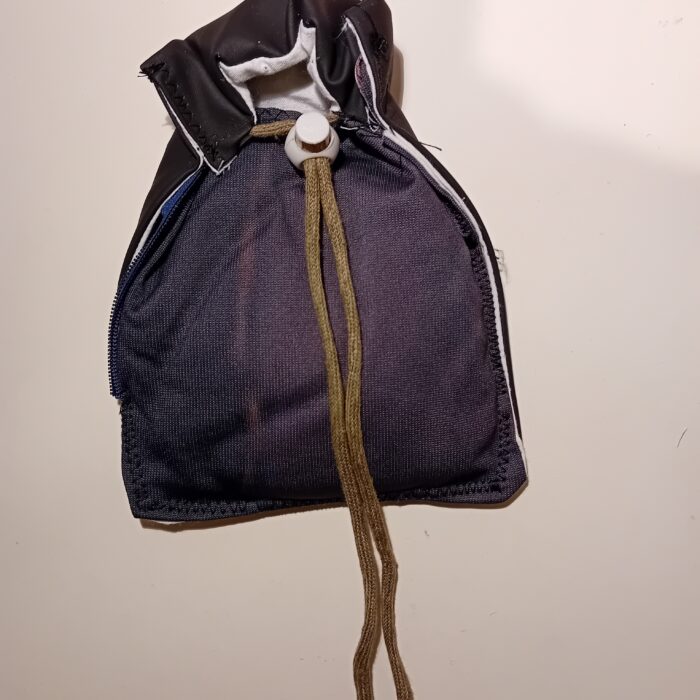
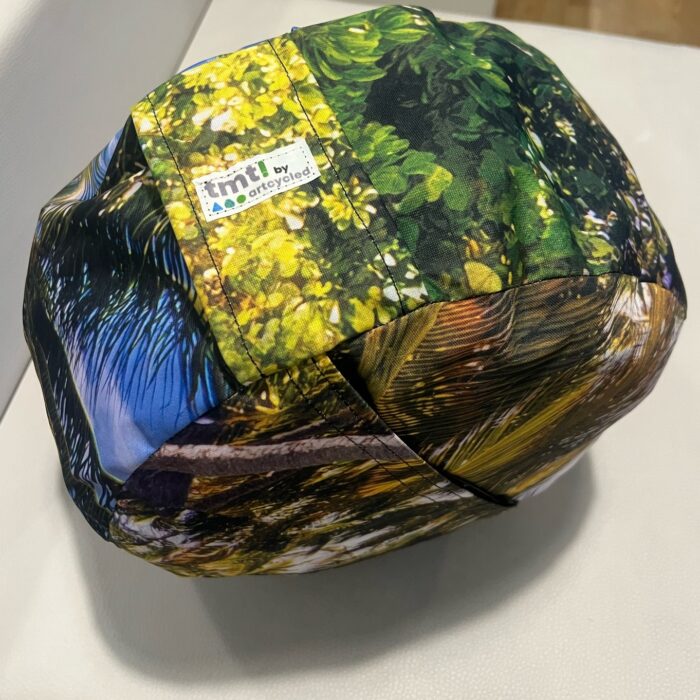
This process resulted in three main prototypes. On the one hand, the first initiative led to the development of a solidarity sleeping bag, a product designed by Sara Benkhiye and Vanessa Fornieles for homeless people, integrating environmental and social values throughout its production, distribution and use. On the other hand, the contest gave rise to two additional winning ideas, among many others that could potentially be developed: a pouf designed as an element for the exhibition sector and a bottle holder conceived as a circular merchandising product.
Once selected, the prototypes were designed and manufactured with the support of their creators and in collaboration with organisations generating social impact: the solidarity sleeping bag was produced by the TOP MANTA workshop, the bottle holder by Fundació Roure, and the pouf by BiNS, a local artisan.
At the same time, Leitat led the environmental and social feasibility study, as well as the analysis of materials and potential applications. The technology centre also participated in the identification of proposals (TextilTHON and contest), the analysis of technical and economic feasibility, and the definition of the reverse logistics system for post-consumer fabrics, from collection to their transformation/upcycling process.
The project has enabled ARTPLAY to establish new connections within a TMT ecosystem involving schools, universities, training centres, artisans, artists, designers and social organisations.
For Leitat, this initiative reinforces its role as a key player in knowledge transfer and in promoting circular business models applicable to industry.