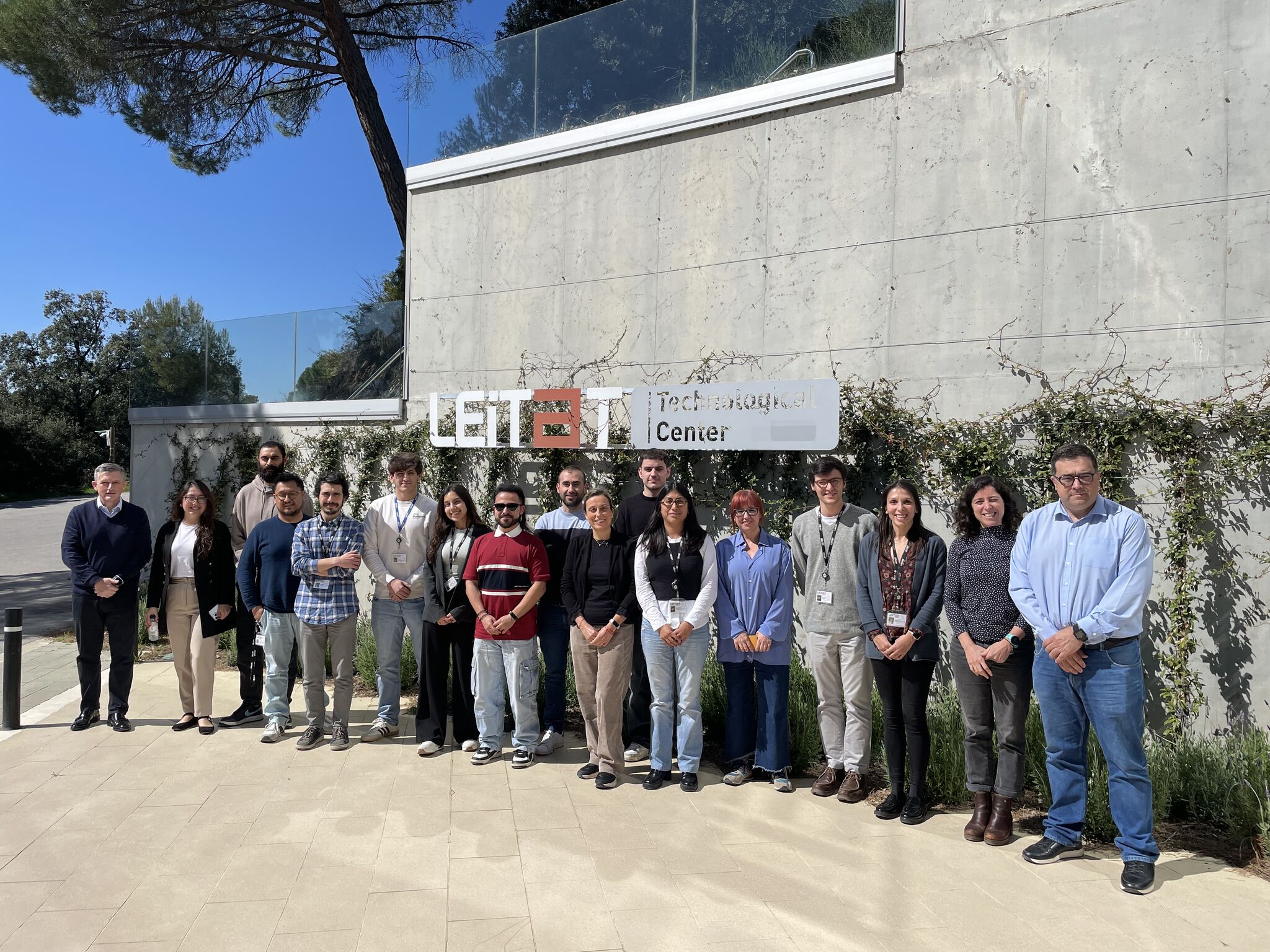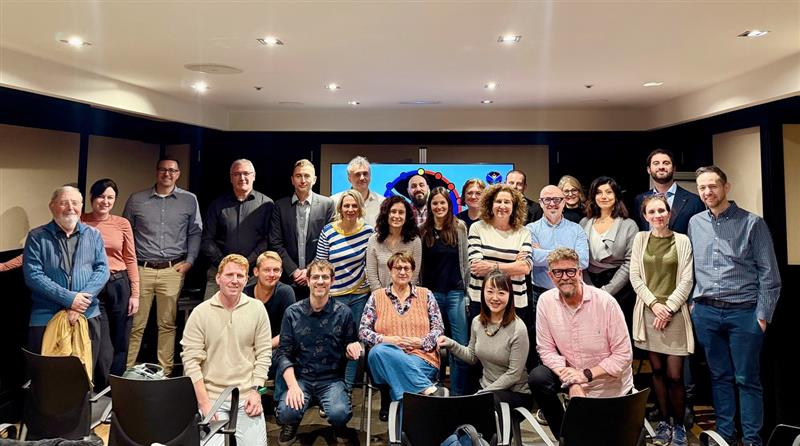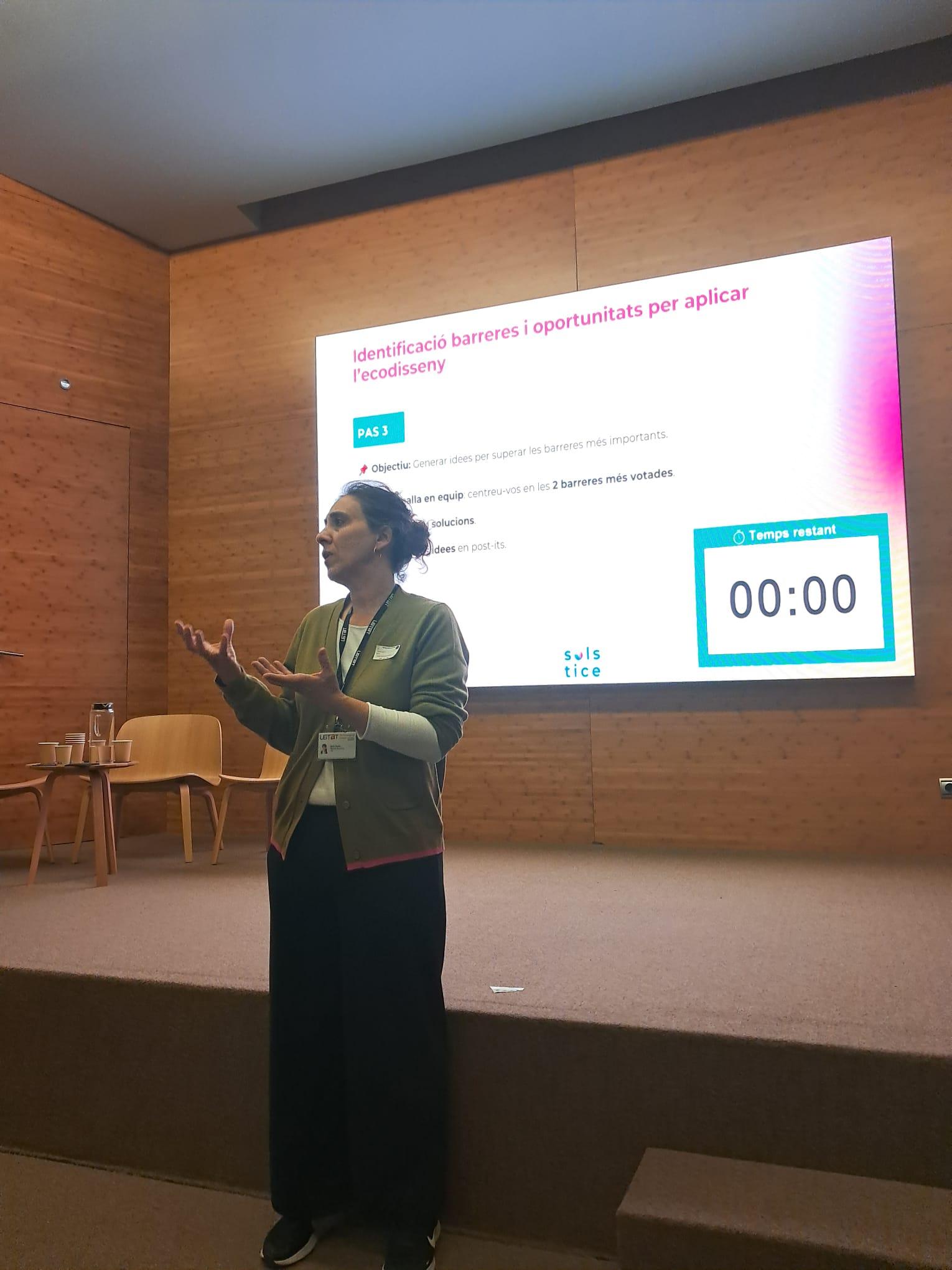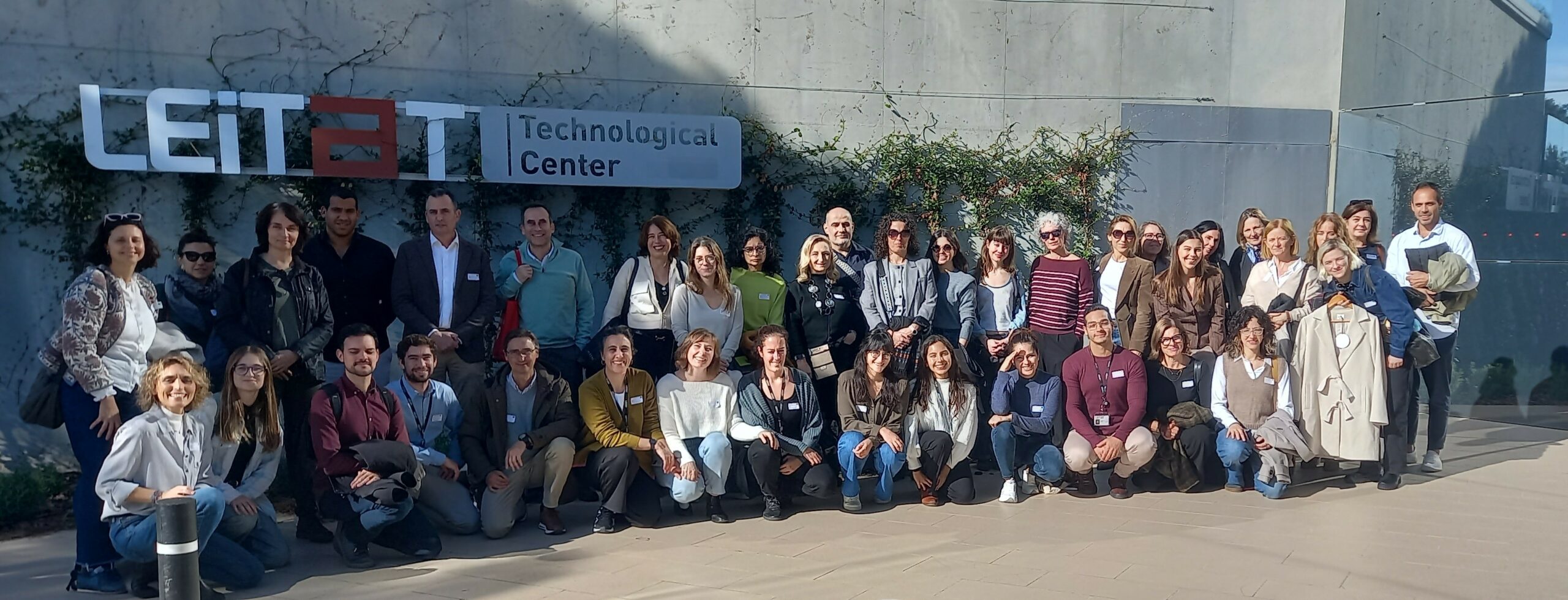
On November 12, Leitat organized an Eco-design Workshop in the textile sector within the framework of the European SOLSTICE project, in collaboration with the Generalitat de Catalunya, Texfor, Tèxtils.cat i el Gremi Tèxtil de Terrassa.
The aim of the workshop was to transfer knowledge, share real experiences, and identify barriers and opportunities to accelerate the integration of eco-design in the textile sector.
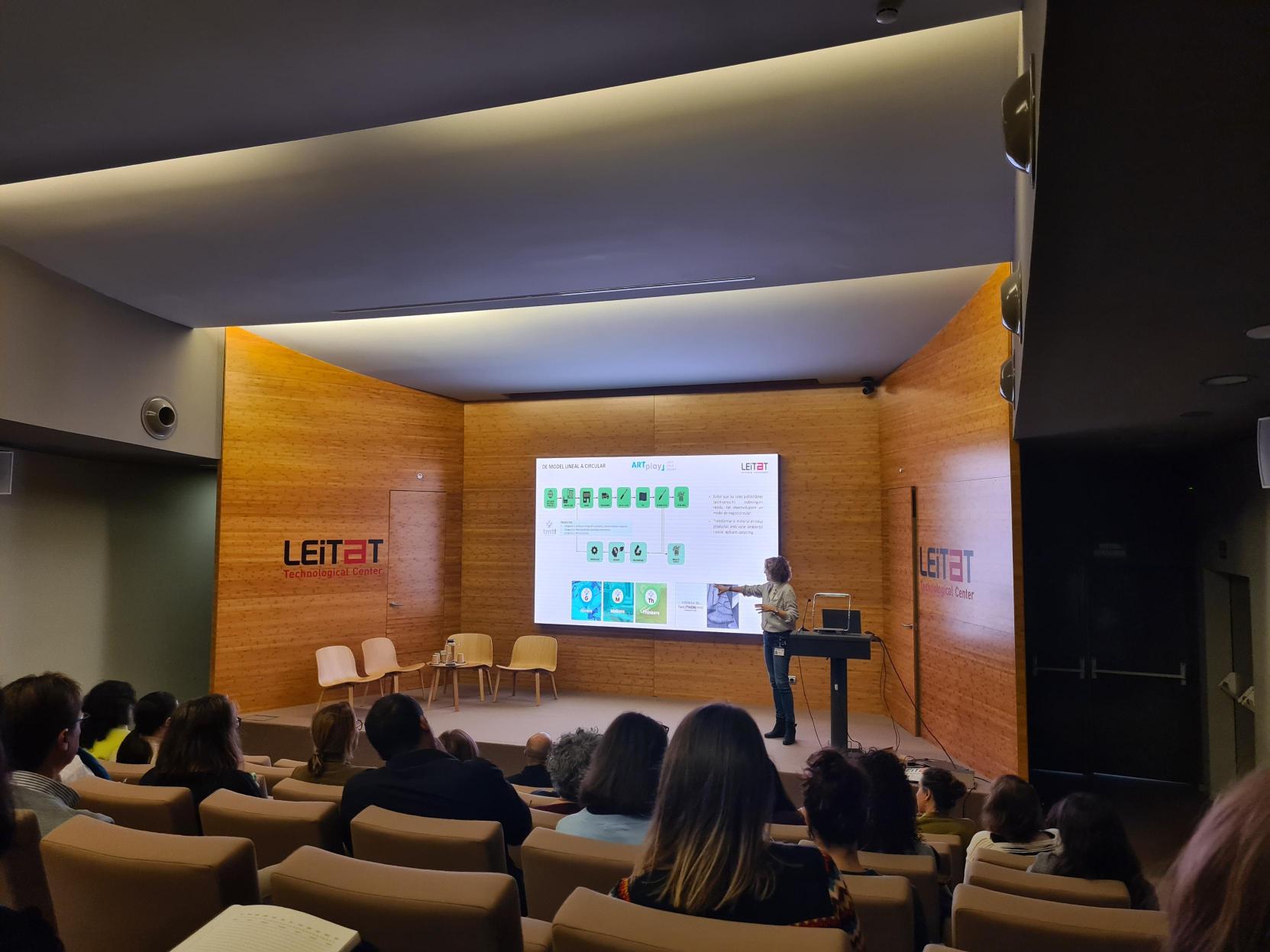
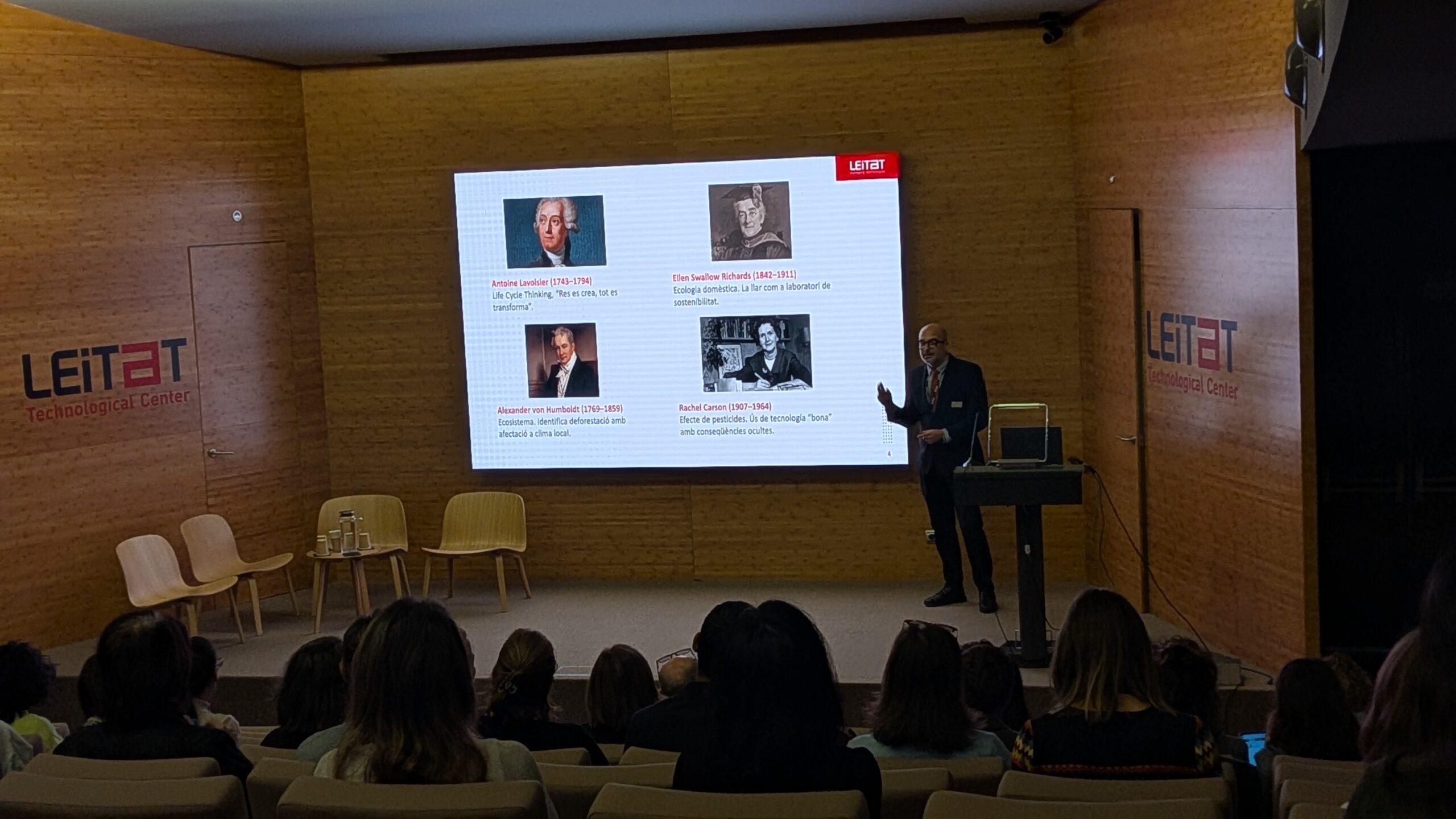
The session began with a welcome from Sergi Artigas, Director of Innovation Strategy and Technology Transfer at Leitat. Next, Marta Escamilla, Head of the Sustainability Area, introduced the concept of eco-design applied to textiles and the main tools to integrate it throughout the product life cycle, providing practical examples and methodologies.
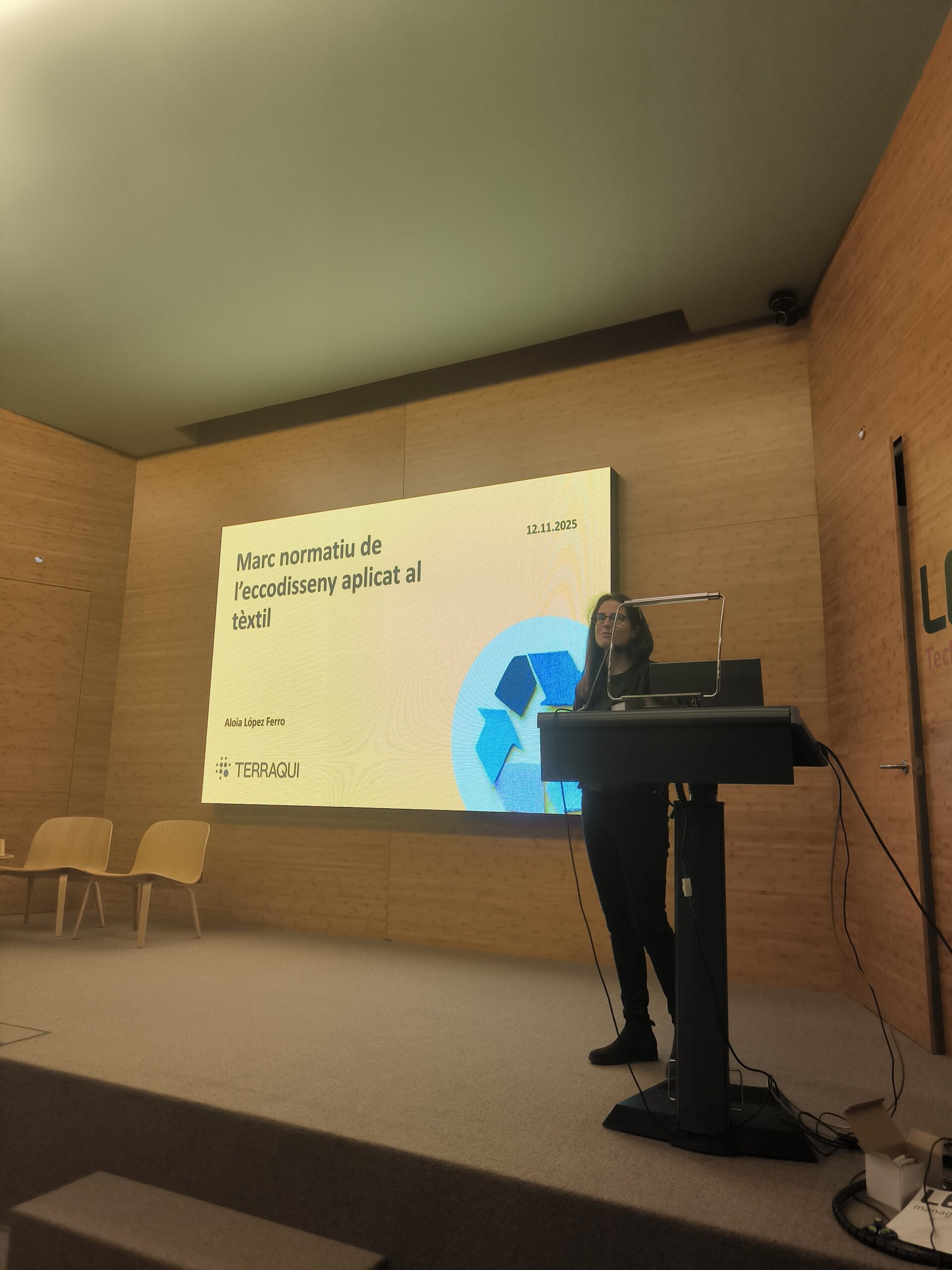
A continuació, Aloïa López, de Terraqui, va presentar el marc normatiu actual i futur de l’ecodisseny tèxtil, incloent-hi el nou Reglament d’Ecodisseny, la Llei 7/2022, i el paper de la Responsabilitat Ampliada del Productor (RAP).
Then, Aloïa López from Terraqui presented the current and future regulatory framework for textile eco-design, including the new Eco-design Regulation, Law 7/2022, and the role of Extended Producer Responsibility (PAR).
Four practical cases of eco-design in the textile sector
El taller incluyó la presentación de cuatro experiencias que ejemplifican cómo aplicar el ecodiseño:
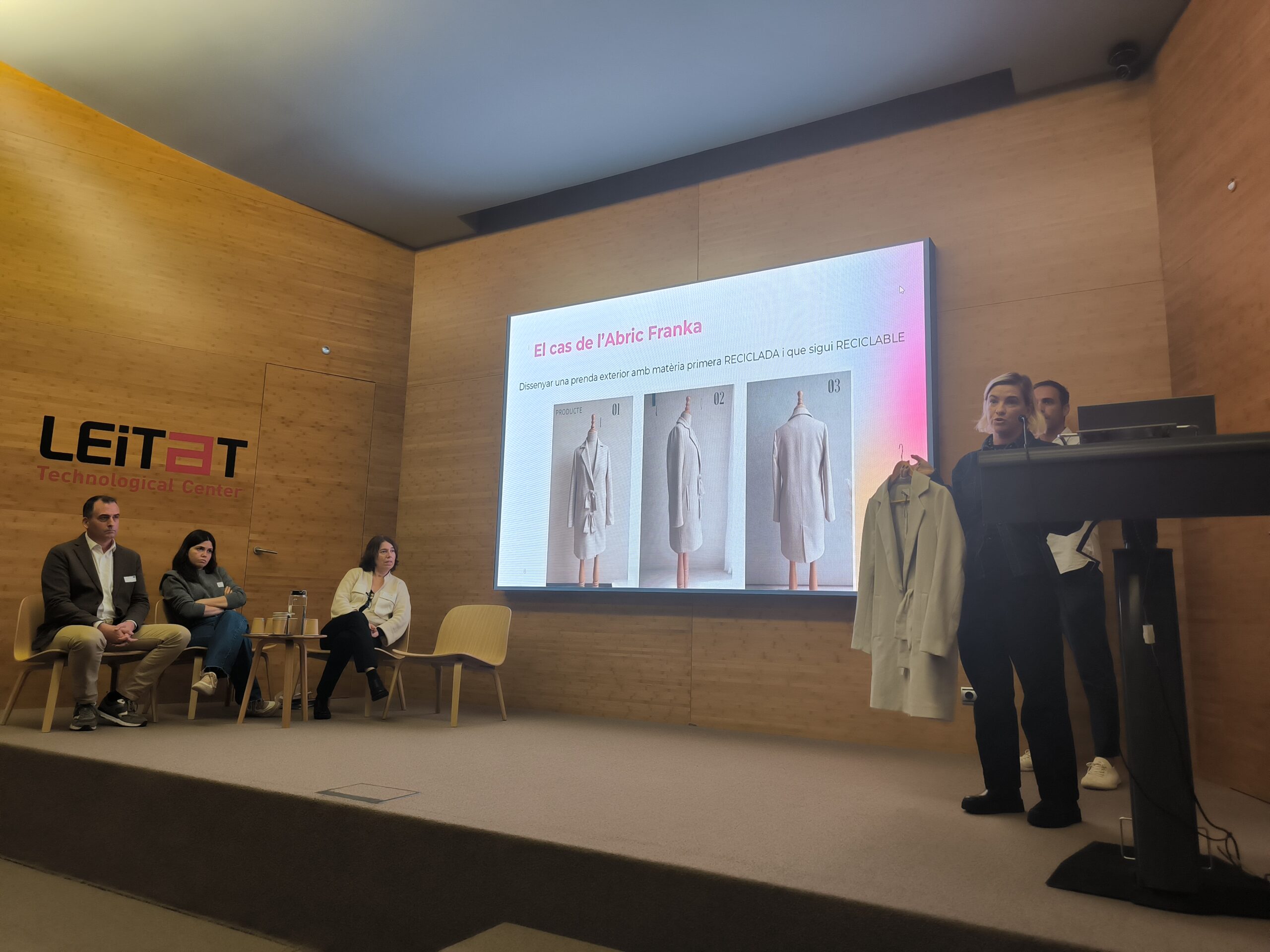
- Coleo – Franka Coat: Recycled and Recyclable (Catalonia Eco-design Award 2025)
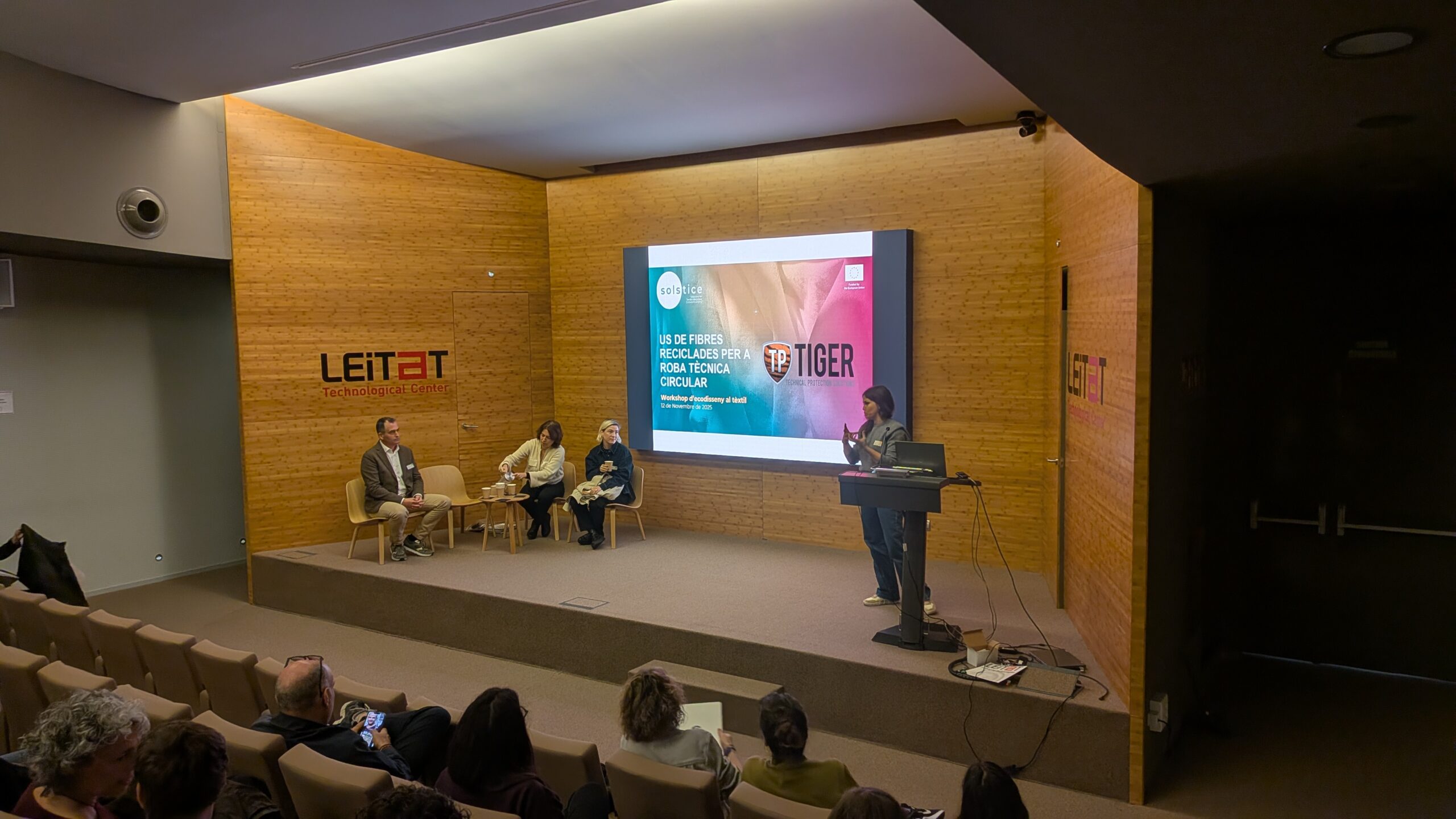
- Technitiger – Use of recycled fibers for circular technical clothing
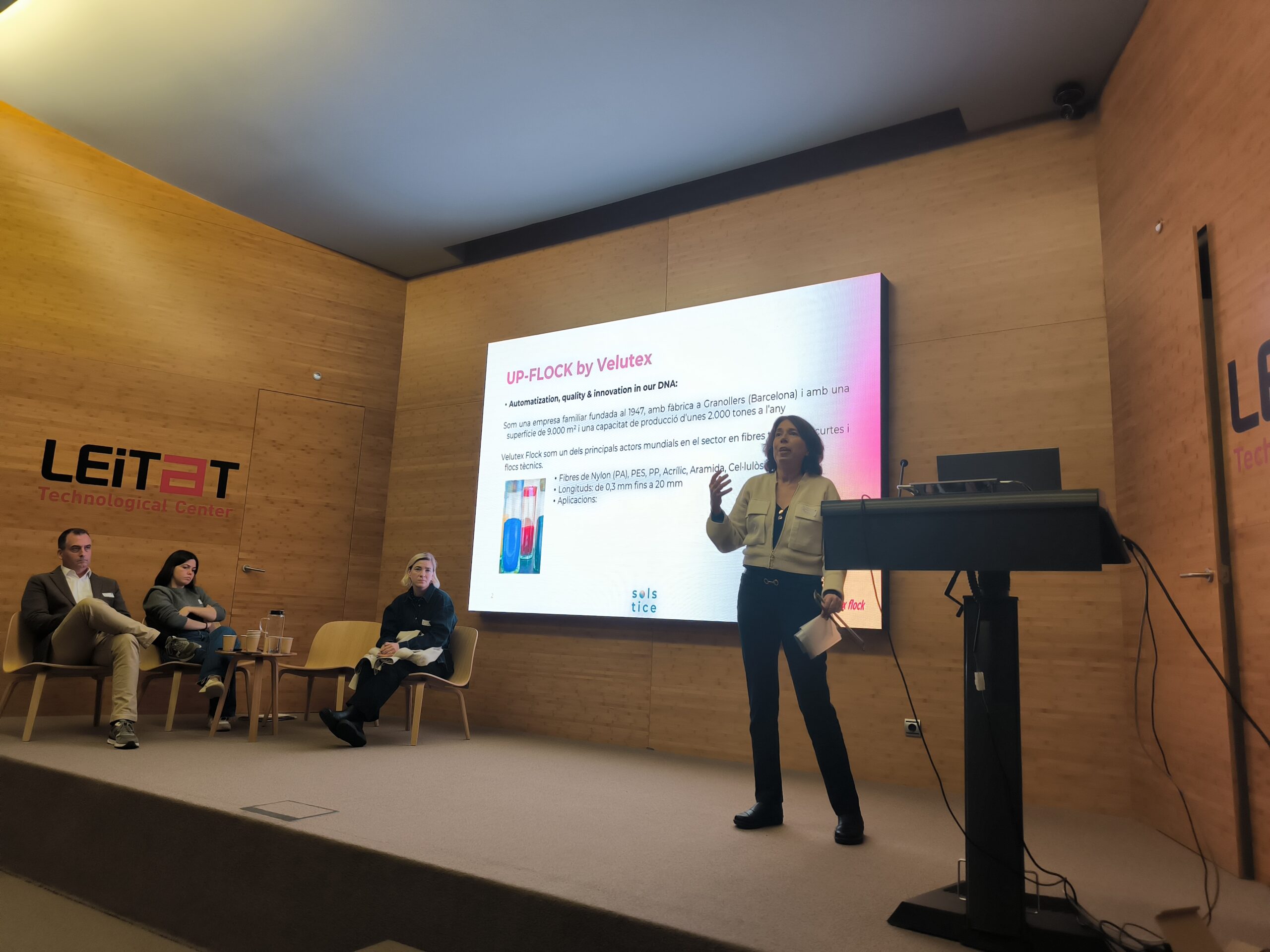
- Velutex – UP-FLOCK: Eco-design of flock and recycled short fibers
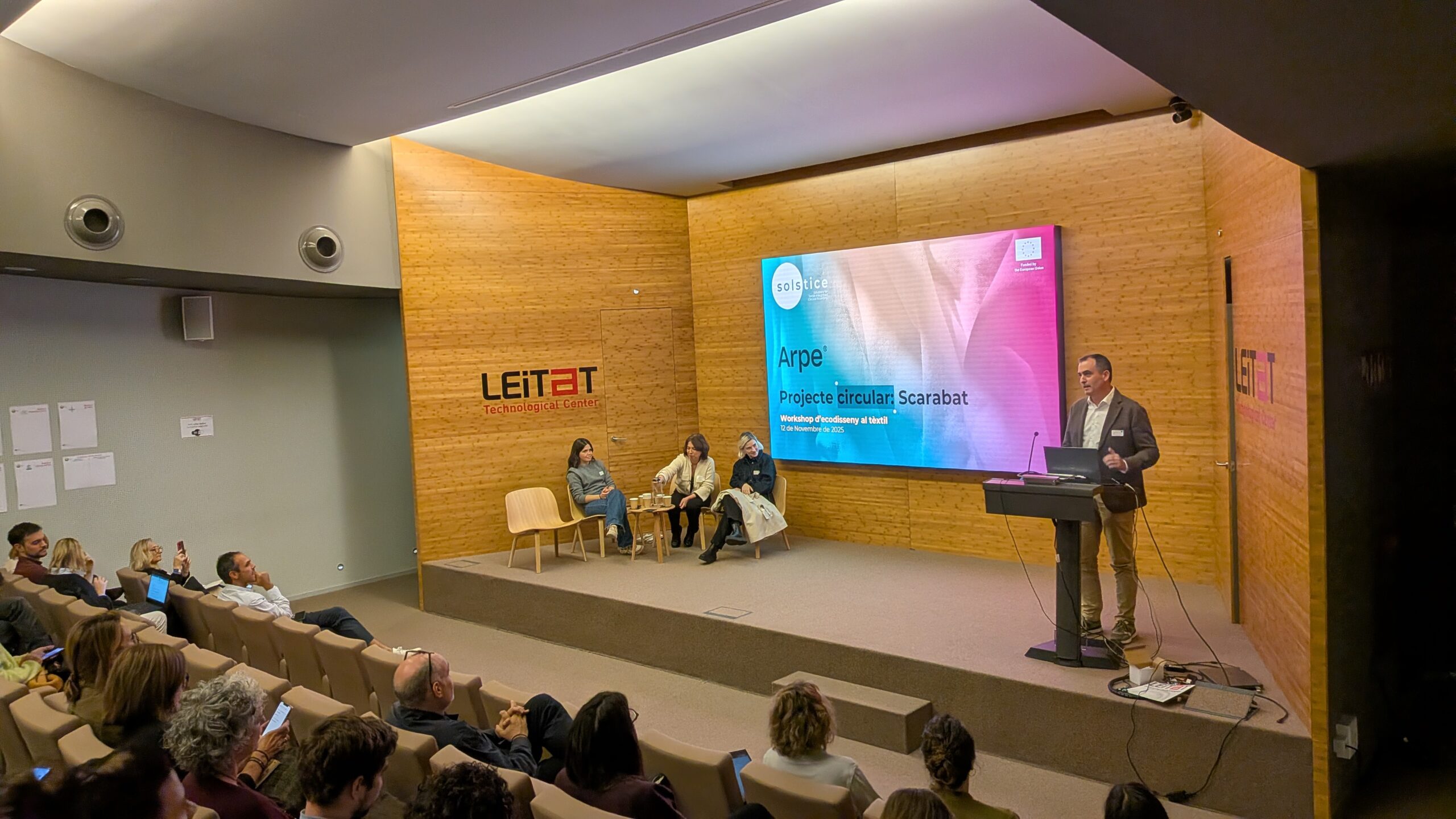
- Arpe – Circular project: Scarabat
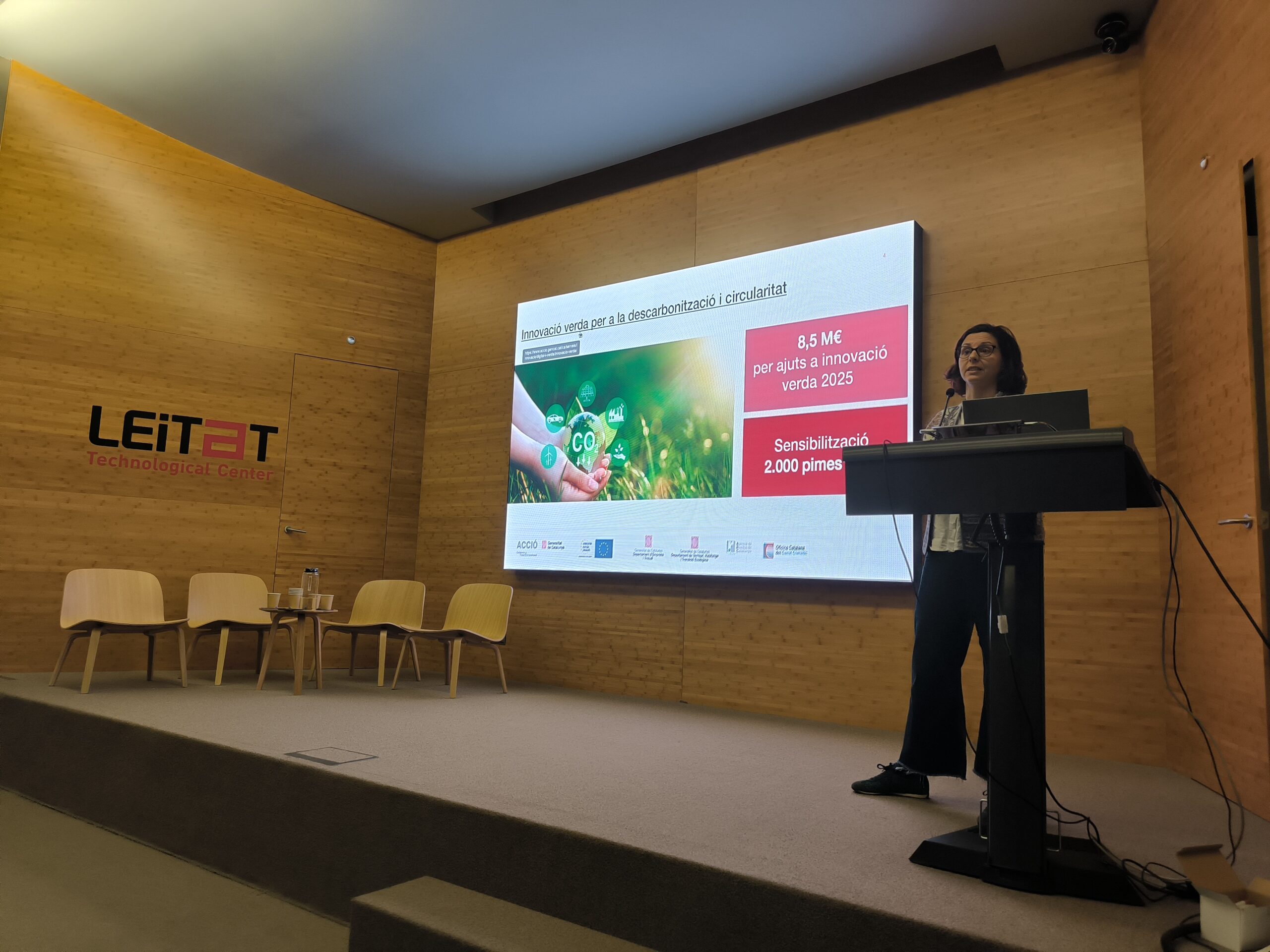
Before the break, ACCIÓ presented the Green Innovation Program for decarbonization and circular economy in companies.
Barriers and solutions to accelerate the sector’s transformation
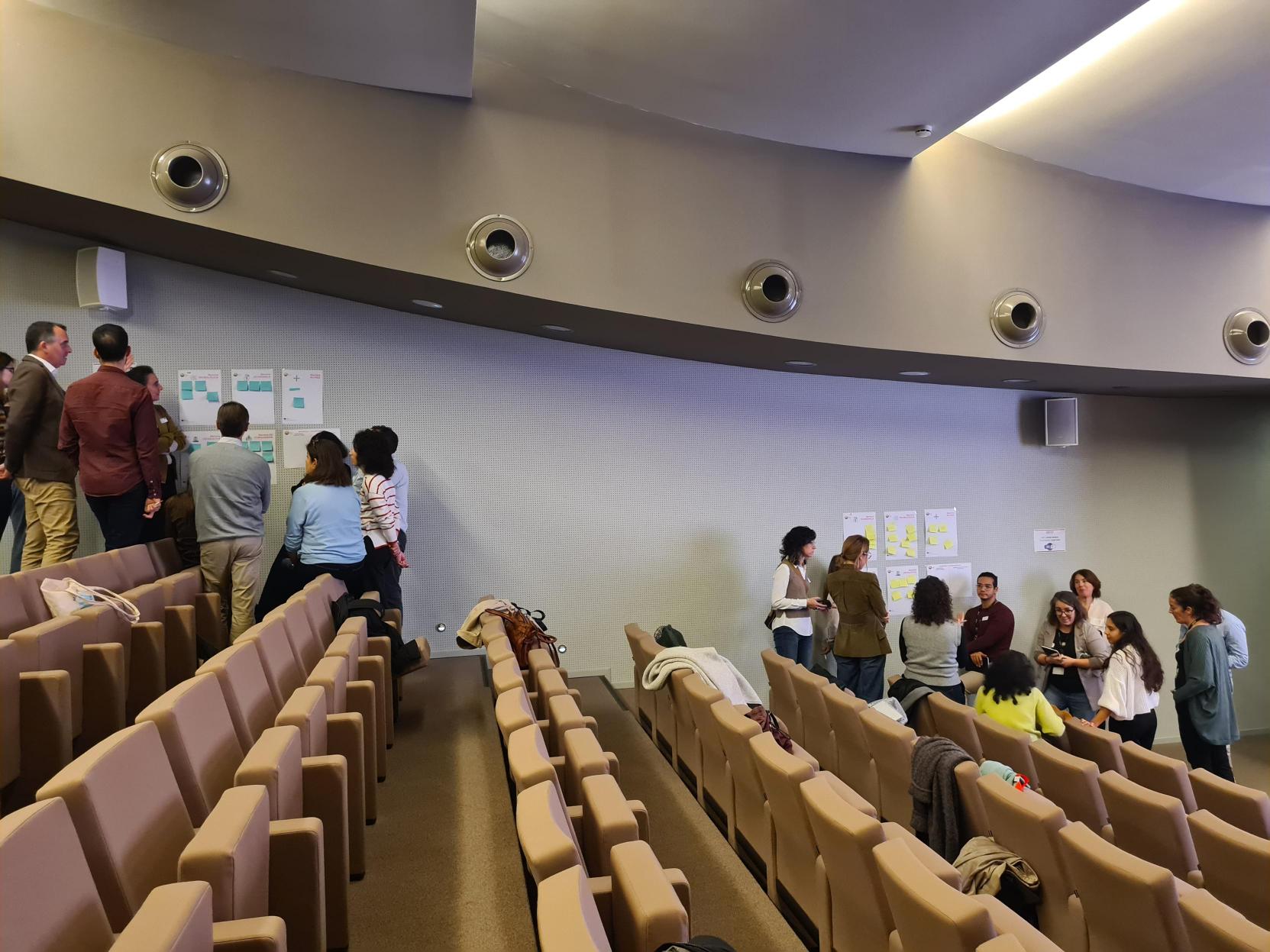
The last part of the workshop consisted of a participatory session to identify technological, economic, legislative, and consumer-related barriers, among others, to applying eco-design in the sector and to propose solutions. The main difficulties identified were:
- High costs of recycling and recycled materials.
- Textile legislation progressing slowly, unclear, and not adapted to SMEs.
- Low consumer awareness and willingness to purchase products with environmental criteria, as well as misinformation.
- Technological limitations (mixed fibers, automation, technical or aesthetic requirements versus properties of recycled or renewable materials).
Proposed solutions included:
- Consumer awareness campaigns.
- Promotion of innovative technologies and industrial symbiosis.
- More flexible regulations adapted to SMEs and incentives for them.
This workshop is the first of three planned within the SOLSTICE project. The next two will take place in 2026, and all results will be compiled in a Guide aimed at promoting eco-design across Europe.
This Workshop was organized under the SOLSTICE project, supported by the EU’s #HorizonEurope Program (GA 101134989).