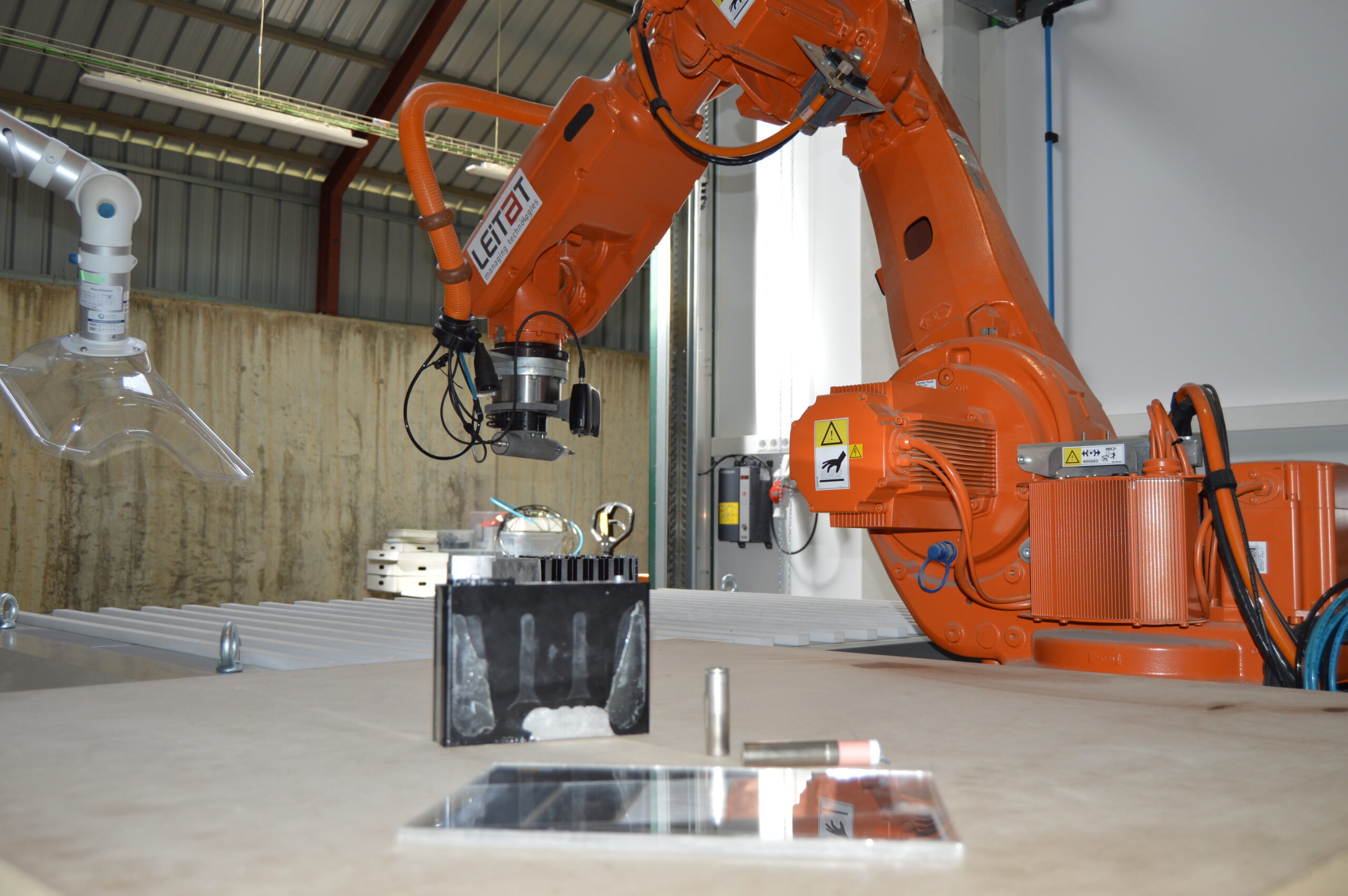
The new pioneering infrastructure in Spain integrates in a single space everything from contactless battery classification and automated dismantling to the recovery of active materials.
This new facility will allow Leitat to carry out research and innovation activities aimed at recovering critical battery materials and strengthening its role in the circularity of the energy and electromobility sectors.
Leitat has secured €6.58 million over the last 5 years in R&D projects related to battery recycling.
Leitat has launched at its headquarters in Terrassa a new laboratory specialized in direct battery recycling, a pioneering infrastructure designed to address one of the major challenges of the energy transition: what to do with batteries at the end of their life cycle and how to recover their key materials for reuse.
This new space makes it possible to transform waste into resources, a concept that Leitat summarizes under the slogan “From waste to watts”: turning used batteries into materials capable of generating new energy.
From waste to a new battery: all in one place
The laboratory has been designed to cover the entire battery management and treatment process, from the moment they arrive as waste to the recovery of the materials they contain.
Specifically, the new facility integrates capabilities that enable:
- the reception and safe storage of used batteries,
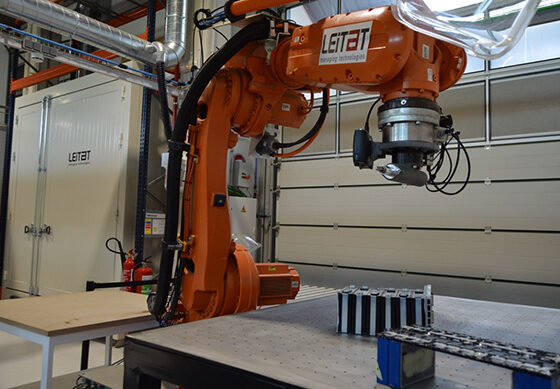
- the controlled and automated dismantling of packs, modules and cells,
- the diagnosis and classification of batteries according to their chemistry and state of health,
- and the separation and recovery of active materials for reuse.
The entire process is carried out under strict criteria of safety, efficiency and sustainability, both from an industrial and environmental perspective.
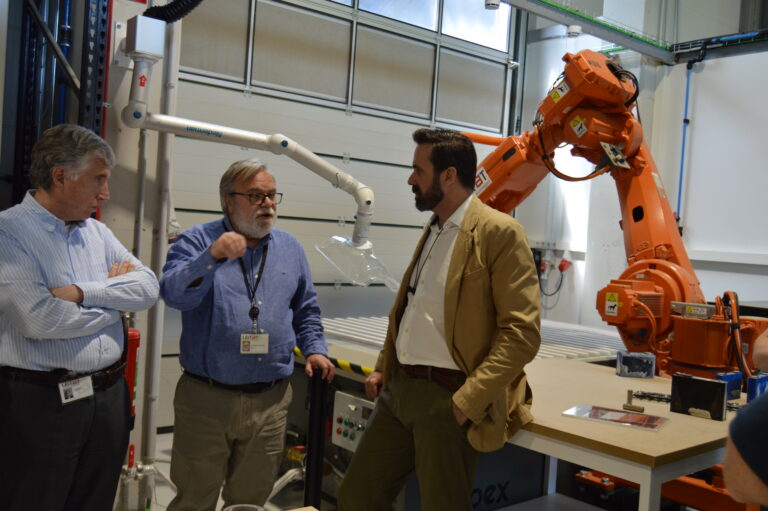
What “dry process” battery recycling means and why it matters
One of the main values of the new laboratory is its commitment to direct battery recycling through a dry process, an innovative approach different from conventional methods.
Unlike traditional systems, which often melt materials at high temperatures or use large amounts of chemicals and liquids, direct dry recycling allows:
- direct recovery of active battery materials (mainly cathodes and anodes),
- preservation of their structure and functional value,
- and minimization or elimination of liquids and complex chemical processes.
This results in cleaner processes, lower energy consumption and reduced environmental impact, while making better use of critical materials such as lithium, nickel, cobalt and manganese.
This approach enables the study and development of solutions both for end-of-life batteries and for waste and leftover materials from manufacturing processes.
In both cases, the objective is to recover high-value raw materials without having to chemically break them down into basic elements, thus facilitating their direct reuse in new batteries.
A unique infrastructure in Catalonia and Spain
The new Leitat laboratory is the first infrastructure in Catalonia and Spain to integrate, in a single space:
- Technologies to identify battery chemistry without contact.
- Automated and robotic dismantling of electric vehicle batteries down to electrode level.
- Recovery of active materials from anodes and cathodes for reuse.
This combination of capabilities positions Leitat as a key player in the development of advanced recycling technologies and circular economy solutions for the battery sector.
A strong track record in battery technologies
Leitat has extensive experience in the field of battery technologies. Since the creation of its Energy Storage area in 2009, the center has participated in 75 R&D projects, of which 64% have been developed with companies and 36% correspond to European and national research projects.
In addition, Leitat has coordinated 10 European projects under recent EU framework programs (FP7, Horizon 2020 and Horizon Europe) and has worked with 36 companies across ten different industrial sectors, from mining and materials to energy, transport, recycling and artificial intelligence.
Since 2021 alone, the center has secured €6.58 million in projects related to battery recycling, consolidating this line as one of the emerging areas of its technological strategy.
Robotics and electrochemistry: a key combination
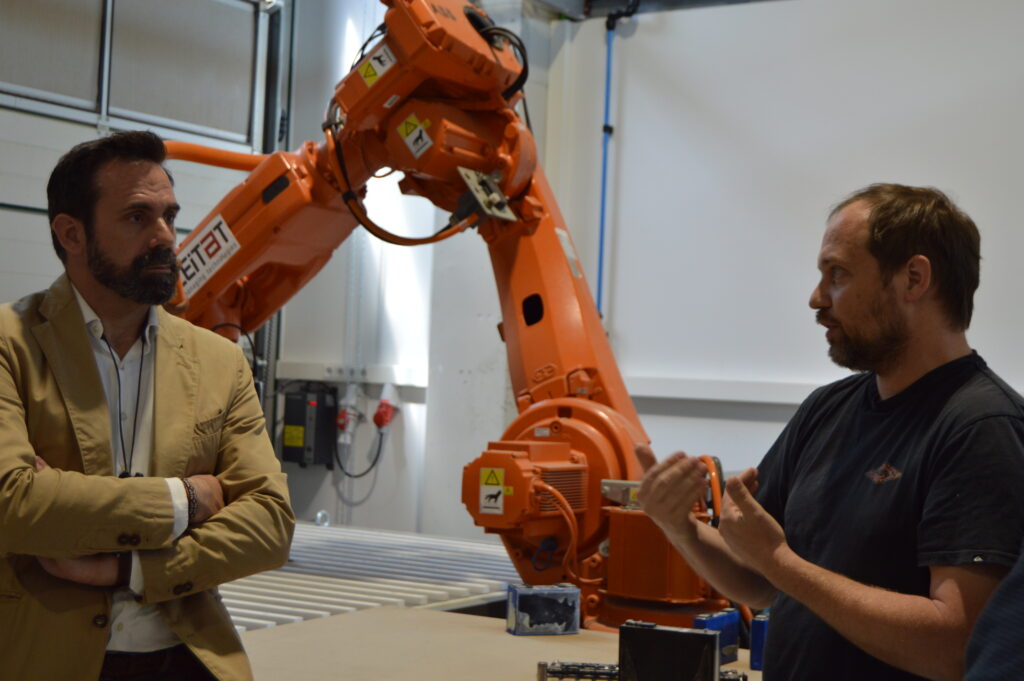
The new laboratory will be jointly operated by Leitat’s Energy Storage (ES) and Robotics & Automations (ROB) areas.
This collaboration combines deep knowledge in electrochemical technologies with expertise in industrial robotics and process automation. Thanks to this integration, Leitat can cover the entire process, from battery classification to robotic dismantling and recovery of critical materials, transferring solutions directly applicable to industry.
A strategic challenge for the energy transition
The expansion of electric mobility and energy storage systems is driving a strong increase in global battery demand. This growth raises key challenges:
- the availability of critical materials,
- waste management,
- and the need for more efficient and sustainable recycling technologies.
In this context, automation and battery valorization become essential to move towards a circular economy in the energy sector, reduce external dependency and strengthen European industrial sovereignty.
In the words of Jordi Cabrafiga, General Director of Leitat: “The development of technologies for battery recycling and valorization will be key to ensuring a more sustainable and resilient energy value chain. With this new laboratory, Leitat strengthens its capacity to generate applied knowledge and transfer technological solutions to industry.”