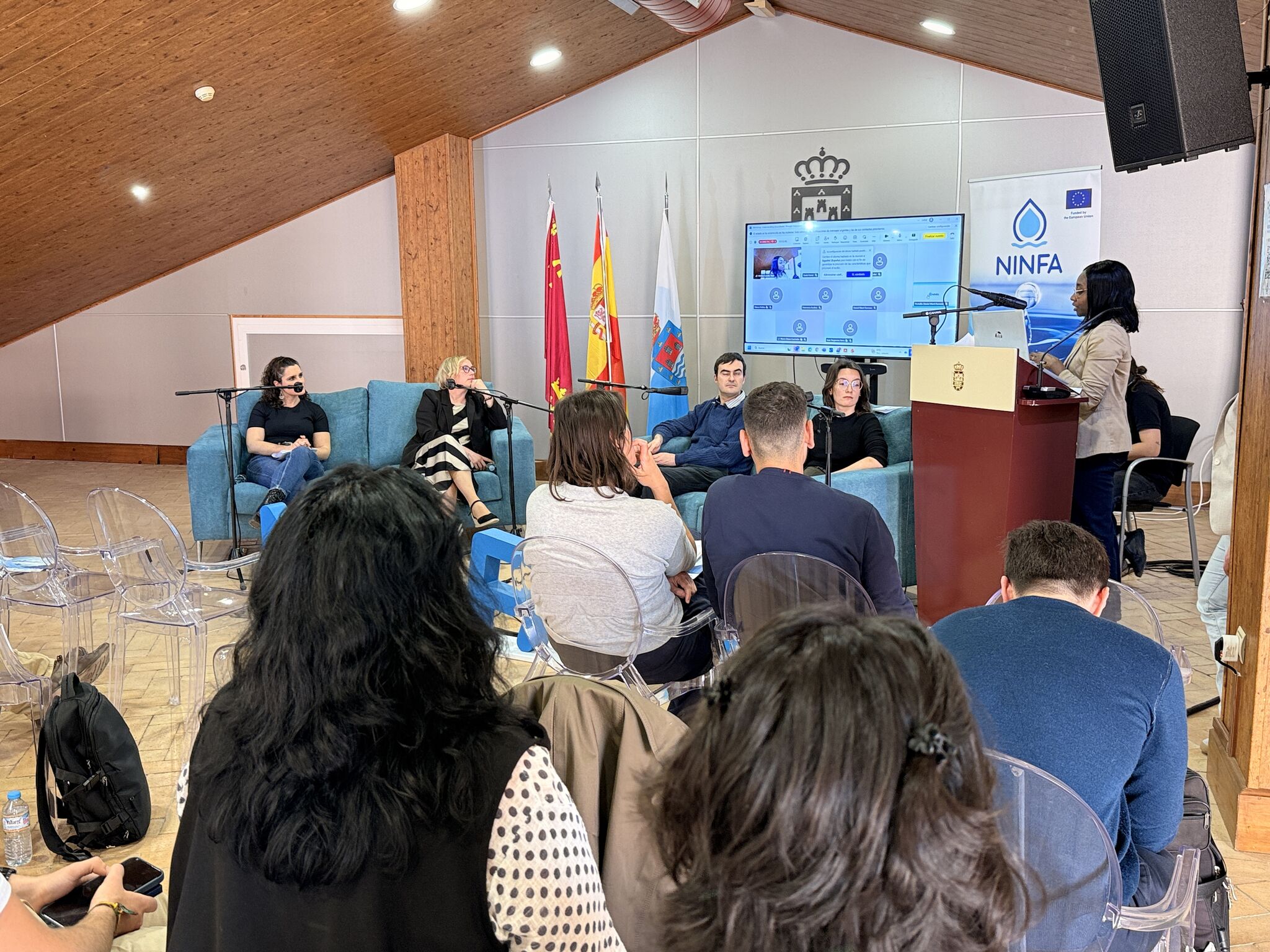
The NINFA workshop highlighted the role of technological innovation, cross-project collaboration, and advanced digital tools in addressing groundwater management challenges in the Mar Menor region.
On 21 April, the European project NINFA hosted its workshop, “Understanding Groundwater Through Innovation,” at the Los Alcázares Town Hall (Murcia, Spain). The event brought together representatives from public authorities, research organisations, technology centres, and industry to exchange knowledge and explore innovative solutions for more sustainable groundwater management.
The workshop was officially opened by Mario Ginés Pérez Cervera, Mayor-President of Los Alcázares, and Ignacio Villanueva Jover from the Hydrological Planning Office of the Segura River Basin Authority. Their presentations highlighted the main environmental challenges facing the region, particularly those linked to groundwater resources and the protection of the Mar Menor ecosystem.
Leitat Showcases NINFA’s Progress and Vision
During the event, Ainhoa Gaudes, researcher at Leitat, introduced the objectives and approach of the NINFA project. The initiative focuses on improving groundwater understanding, monitoring, and management through innovative technologies and advanced decision-support tools.
This was followed by a presentation from Irene Fernández Fernández of Aqualia, who showcased the technologies being developed within the project and the pilot activities currently underway to enhance groundwater management and protection practices.
Digital Innovation to Support Smarter Decision-Making
One of the highlights of the workshop was the presentation of the NINFA Decision Support System (DSS) by Georgios Manassakis. This advanced digital platform integrates monitoring data, modelling tools, and predictive capabilities to support evidence-based decision-making for sustainable water management.
The participation of representatives from the Segura River Basin Authority also provided valuable institutional and technical perspectives on the groundwater challenges currently affecting the region.
Fostering Collaboration and Knowledge Exchange
The event featured an engaging roundtable discussion moderated by Henrietta Whyte from IMT Atlantique, bringing together experts from several national and European projects focused on groundwater protection and management.
The panel included:
Mª Mercedes Guerrero (CEBAS-CSIC) – BELICH Project
Virginia Robles (IGME-CSIC) – CLEPSYDRA Project
Miguel Ángel Suárez Valdés (CETENMA) – NPower Project
Ana Isabel Paredes Ortiz (CETENMA) – SEACURE Project
The discussion addressed key topics such as groundwater pollution, innovative monitoring strategies, emerging technologies, and the integration of scientific knowledge into policy development and decision-making processes.
Building Synergies for Groundwater Protection
A key takeaway from the roundtable was the importance of strengthening collaboration across projects, institutions, and disciplines to effectively address complex environmental challenges.
Participants agreed that knowledge sharing and coordinated action are essential for developing scalable and impactful solutions that contribute to groundwater protection across Europe.
Looking Ahead
The NINFA workshop demonstrated the crucial role of innovation, scientific research, and multi-stakeholder collaboration in developing more resilient and sustainable water management strategies. Tools such as the NINFA Decision Support System, combined with active stakeholder engagement, represent an important step forward in safeguarding groundwater resources for future generations.
The event concluded with a shared commitment to continue fostering cooperation and advancing innovative solutions that support the long-term protection and sustainable management of groundwater resources across Europe.
This project has received funding from the European Union’s Horizon Europe research and innovation programme under grant agreement No 101081865. Funded by the European Union. Views and opinions expressed are however those of the author(s) only and do not necessarily reflect those of the European Union or European Research Executive Agency (REA). Neither the European Union nor REA can be held responsible for them.