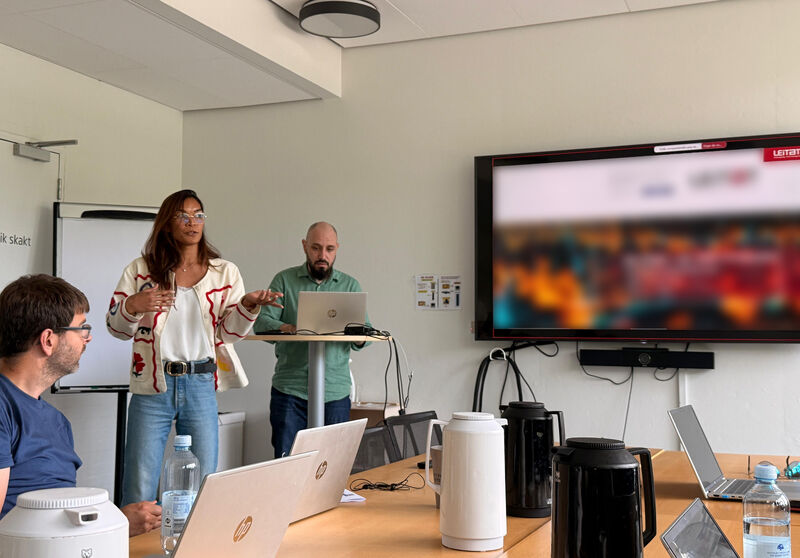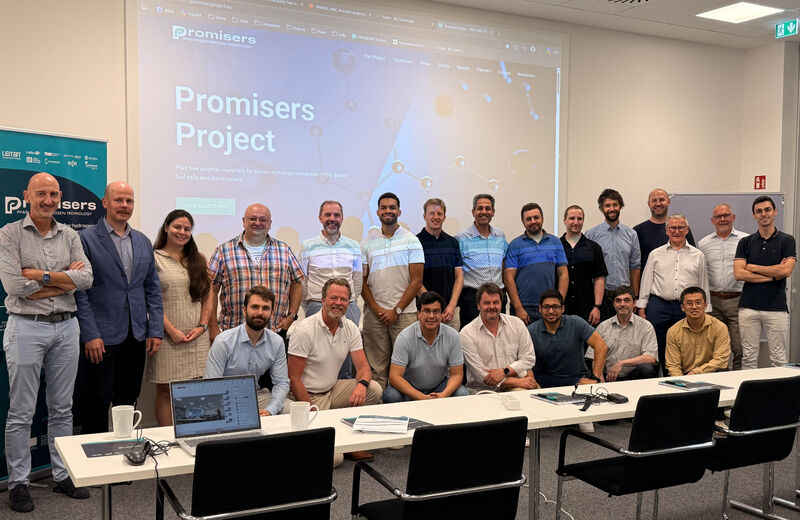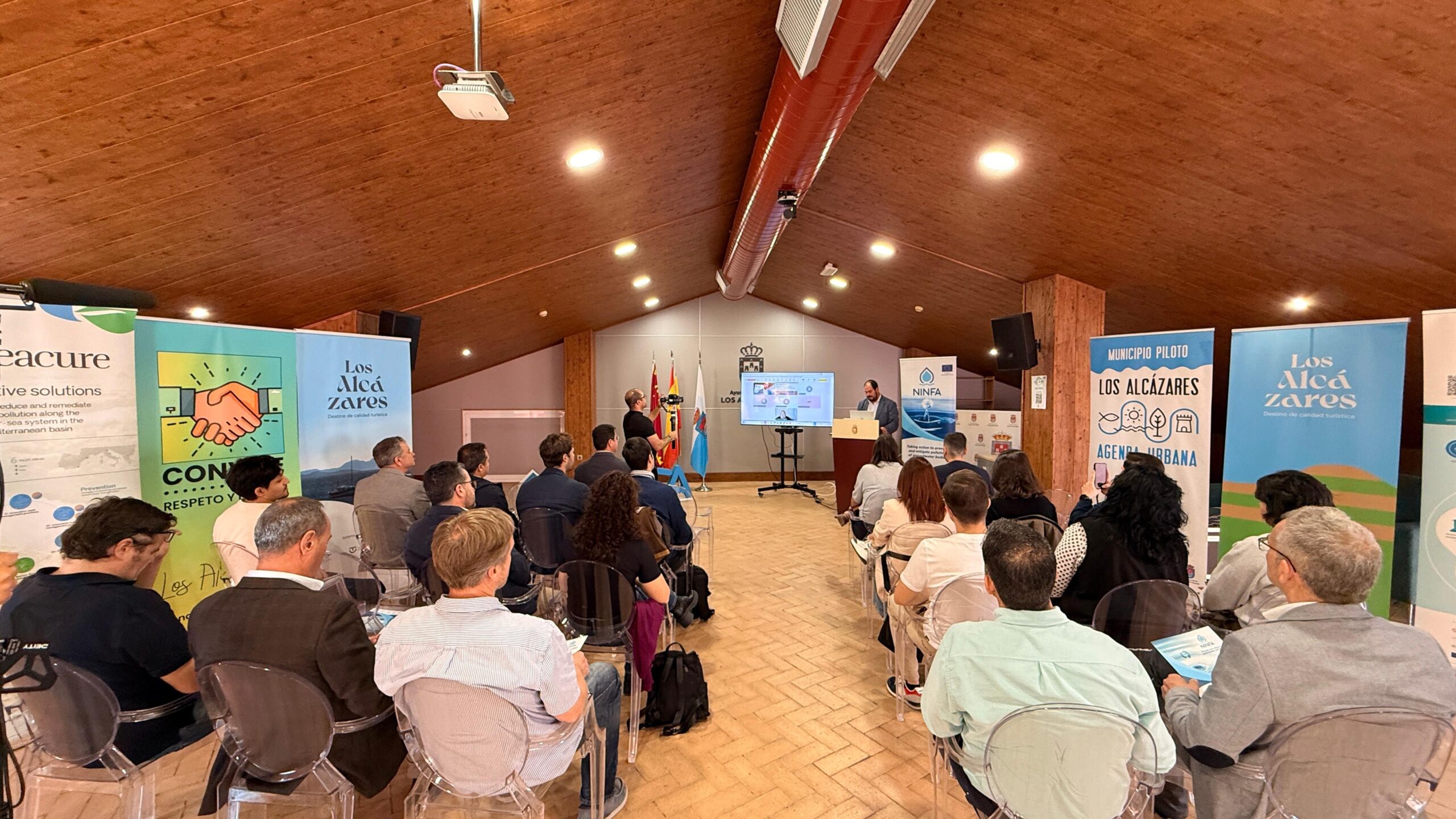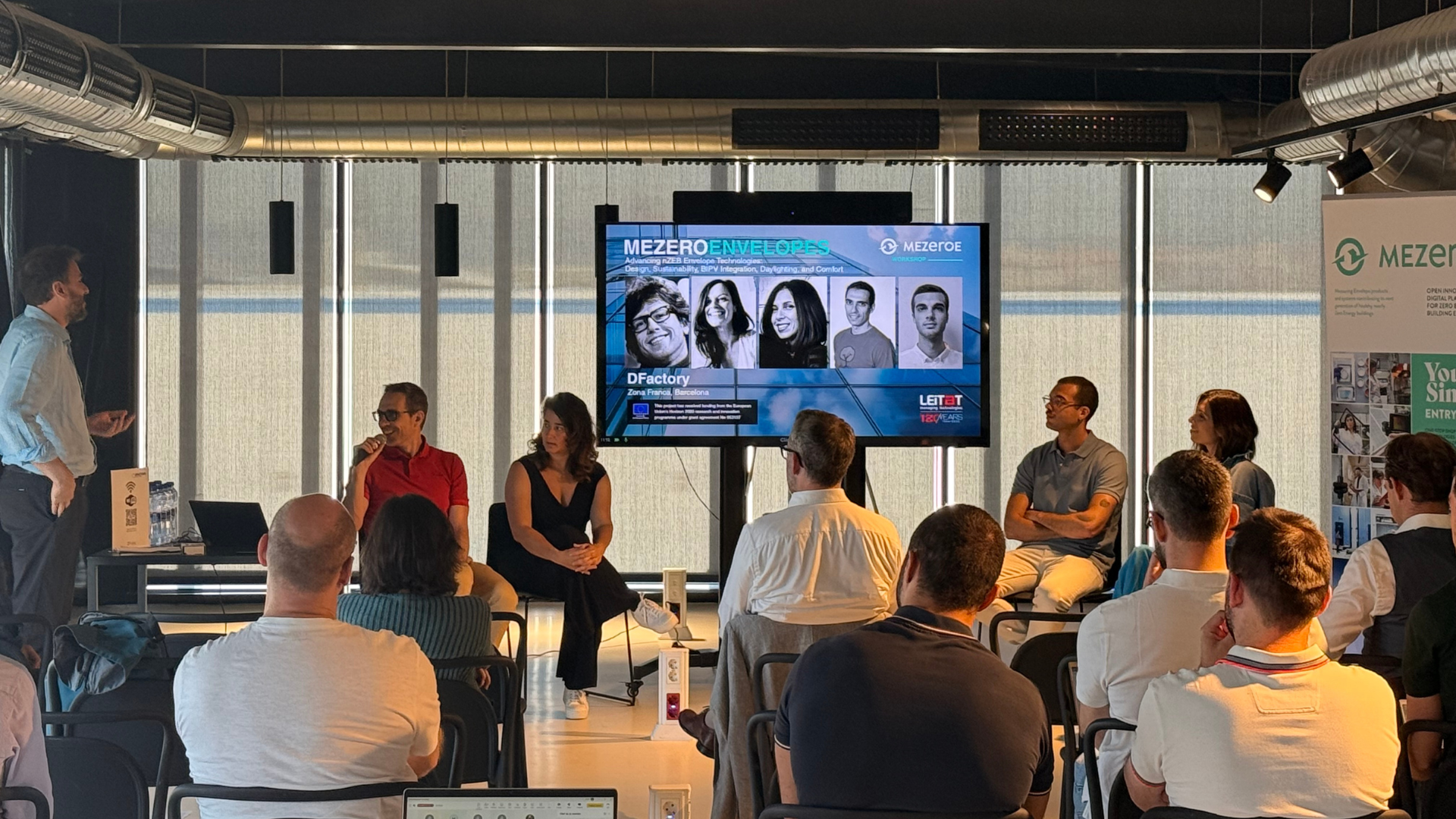
On 29 May, Leitat organised the technical workshop “MEZEROEnvelopes: Advancing nZEB Envelope Technologies” at DFactory Barcelona, bringing together experts and stakeholders from across Europe to discuss the latest innovations in sustainable building envelope solutions.
The workshop, held within the framework of the MEZeroE project, provided a collaborative platform for knowledge exchange on technologies that contribute to the development of nearly Zero-Energy Buildings (nZEBs). The event attracted strong participation both onsite and online, fostering active discussions and valuable networking opportunities among professionals from the construction and research sectors.
To enrich the technical programme, Leitat invited four international experts, who shared their experience and insights on the latest trends, challenges, and opportunities in sustainable building technologies.
The agenda was structured around three key thematic sessions covering some of the most relevant topics for the future of energy-efficient buildings:
- Design & Sustainability, focusing on integrating sustainability principles from the earliest stages of building design.
- Building-Integrated Photovoltaics (BIPV), exploring innovative solutions for integrating photovoltaic technologies into building envelopes.
- Glazed Façades: Daylight & Comfort, presenting strategies to improve indoor comfort while increasing the energy performance of buildings.
Throughout the workshop, participants engaged in dynamic discussions on how innovative envelope technologies can accelerate the transition towards more sustainable, energy-efficient, and resilient buildings.
By hosting this event, Leitat reinforced its commitment to promoting collaboration between research organisations, industry, and technology providers, supporting the development and deployment of innovative solutions for the decarbonisation of the built environment.
Leitat would like to thank all the speakers, participants, and MEZeroE project partners for contributing to the success of the workshop and helping create an inspiring environment for collaboration and knowledge sharing.
This project has received funding from the European Union’s Horizon 2020 research and innovation programme under grant agreement No. 953157.